In brief
The Economic and Financial Crimes Commission (EFCC) of Nigeria has arrested Saleh Mamman, the former Minister of Power, just a week after he was sentenced in absentia to 75 years in prison for corruption. Mamman had previously been found guilty on multiple counts related to the misappropriation of funds intended for hydroelectric projects. His case marks a notable step in Nigeria's fight against corruption, with authorities determined to ensure he serves his sentence.
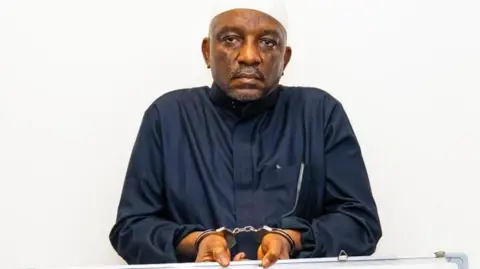
Nigeria's anti-corruption agency says it has arrested former Power Minister Saleh Mamman a week after he was sentenced to 75 years in jail on corruption charges.
The Economic and Financial Crimes Commission (EFCC) stated that Mamman was arrested in the early hours of Tuesday in the northern Kaduna state after weeks of surveillance and intelligence gathering.
In a statement, the agency revealed that the former minister had gone into hiding after being convicted by a court in the capital Abuja earlier this month.
Mamman was found guilty on 12 counts related to the diversion of funds meant for two hydroelectric power projects.
The court ruled that prosecutors had proven their case beyond a reasonable doubt. He was sentenced in absentia after failing to appear in court.
His arrest on Tuesday is significant as it marks a rare follow-through in the fight against high-level corruption, with convictions of top officials being uncommon in the West African nation.
EFCC chairman Ola Olukoyede emphasized the importance of ensuring that the former minister serves his sentence, stating, For us, getting the convict to serve his jail terms is extremely important considering the seriousness with which we are tackling corrupt practices.
During the trial, the judge indicated that the EFCC had demonstrated that Mamman and his associates diverted at least 22 billion naira ($14 million; £10 million) intended for critical electricity projects.
The judge described this diversion as a gross abuse of public trust and highlighted the use of proxy companies and associates to siphon funds from these projects.
As a result of multiple charges, Mamman's prison terms will run consecutively, culminating in a total of 75 years.
In addition to this case, he faces a separate corruption trial in Abuja regarding allegations of fraud involving 31 billion naira. A judge has previously issued a warrant for his arrest in that case after he failed to appear in court.
Mamman served as Nigeria's power minister from 2019 to 2021 under former President Muhammadu Buhari. His conviction has sparked outrage over Nigeria's ongoing electricity issues, especially since he had promised to improve the power supply during his tenure.
Despite being one of Africa's largest energy producers, Nigeria continues to experience frequent blackouts and power cuts that severely impact homes and businesses. Consequently, many citizens rely on fuel generators for electricity, though rising fuel costs are making this increasingly difficult.