In brief
Israel’s plans to convert about 450 acres of Palestinian land around the ancient Sebastia site into a national park have ignited a bitter dispute. Palestinian residents, represented by figures like landowner Abu Mudif, declare that the expropriation strips them of both livelihood and cultural heritage. The United Nations UNESCO body has added Sebastia to its World Heritage in Danger list amid fears that the land seizures will erase the site’s Palestinian legacy. Israeli officials, including Foreign Minister Gideon Saar, defend the move as a preservation effort, while activists such as Alon Arad argue that archaeology is being weaponised to legitimise settlement expansion.
In the hills above the Roman columns of Sebastia, olive fields continue to thrive, cultivated for centuries by Palestinian families. Yet Israeli authorities are now claiming a 450‑acre tranche of that land for a new national park, a move that feels like an exile of heritage to many.
One owner, Abu Mudif, has been told the land belongs to the park’s expansion plans. He says he feels “like having your soul ripped away.” With little or no compensation, most Palestinians reject the offer as a tacit admission of loss.
Nahed Sakha, a local restaurant owner, fears her building will be demolished. The Israeli plan is seen as a strategy to cut residents off from the archaeological site, which boasts layers from the Jews, Romans, Crusaders and Ottomans.
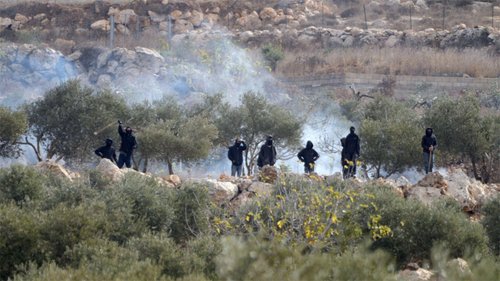
Restoration has begun; Israeli troops now guard the area. Locals are told they cannot use or plough the fields, effectively turning the site into a fenced military zone.
WHO'S IN LAWN? The United Nations’ UNESCO has added Sebastia to its World Heritage list and flagged it as endangered. It warns that the “planned expropriation” will split the site, threatening its Palestinian heritage.
In a quiet village, mayor Mohammed Azem points out that the site’s path now cuts between Area B and Area C of the West Bank, under different controls. Locals fear close inspections may lead to further confrontations.
Israel has also begun to seize about 80 acres at Herodium, a hilltop fortress near Jerusalem. A Palestinian‑run charity, Peace Now, says the land‑take violates international law and Israeli court rulings that forbid expropriation for settlement purposes.
The debate has intensified when the Israeli government proposed a new law to hand control of archaeological sites to the Heritage Ministry. The bill, designed to allow land seizures for “preservation,” did not proceed to a vote before the upcoming elections.
Activist Alon Arad insists that archaeology is a pretext for real estate grabs. He warns that history is being rewritten to justify land reallocation from Palestinians to Israelis.
Today’s metaverse readers can explore virtual reconstructions of Sebastia’s ruins, experiencing the layers of history that stir political tension. An interactive “walkthrough” lets avatars view the Roman forum, the basilica’s columns, and the modern security barriers that frame the conflict.
Israel’s foreign minister Gideon Saar dismisses UNESCO’s concerns, claiming historic ties remain unquestioned. He argues that “no vote in an international organisation can change history.”