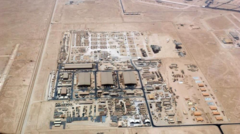
The attack, confirmed by Iranian state media, aimed at one of the largest US military installations in the Middle East. Iranian authorities stated that the missile launch was in direct response to the American strikes. The Islamic Revolutionary Guard Corps (IRGC) emphasized that they would not tolerate any violations of Iran’s sovereignty, reinforcing their commitment to act against perceived aggressions.
In the days leading to the missile launch, both the United States and United Kingdom issued warnings, advising their citizens in Qatar to remain sheltered. Reports vary on the number of missiles launched, with figures ranging from six to 19, although all were reportedly intercepted with no casualties.
After the attack, US President Trump expressed gratitude for Iran's warning prior to the missile launch, characterizing the response as weak and asserting that it might open pathways to peace. In contrast, Qatar's foreign ministry described the incident as a violation of its sovereignty, expressing surprise at the escalation.
Iran's Supreme Leader, Ayatollah Khamenei, communicated that while no harm was intended, Iran would not submit to external aggressions. The evolving situation has highlighted the precarious nature of political and military relations in the region, particularly between the US, Iran, and Israel, which has been engaging in ongoing strikes against Iranian targets.
As tensions build, questions remain regarding future actions from both US forces and Iranian military capabilities, with analysts watching closely to learn how the international community will respond to these developments.
In the days leading to the missile launch, both the United States and United Kingdom issued warnings, advising their citizens in Qatar to remain sheltered. Reports vary on the number of missiles launched, with figures ranging from six to 19, although all were reportedly intercepted with no casualties.
After the attack, US President Trump expressed gratitude for Iran's warning prior to the missile launch, characterizing the response as weak and asserting that it might open pathways to peace. In contrast, Qatar's foreign ministry described the incident as a violation of its sovereignty, expressing surprise at the escalation.
Iran's Supreme Leader, Ayatollah Khamenei, communicated that while no harm was intended, Iran would not submit to external aggressions. The evolving situation has highlighted the precarious nature of political and military relations in the region, particularly between the US, Iran, and Israel, which has been engaging in ongoing strikes against Iranian targets.
As tensions build, questions remain regarding future actions from both US forces and Iranian military capabilities, with analysts watching closely to learn how the international community will respond to these developments.