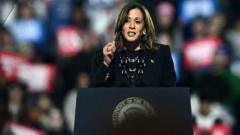
Kamala Harris's bid for the presidency has swiftly become a subject of scrutiny following her decisive loss to Donald Trump. In a recent appearance on ABC's The View, Harris struggled to connect with voters, infamously stating, "Not a thing comes to mind" when asked what she would have done differently from President Biden. This moment encapsulated the broader challenges Harris faced in her campaign, which were overshadowed by the unpopular incumbent.
When Harris conceded the election, she implored her supporters to "not despair," marking a poignant moment of reflection for a campaign that faltered despite initial enthusiasm. Campaign manager Jen O'Malley Dillon expressed the "unfathomably painful" experience of losing after what they anticipated would be a closer race, leaving many aides in shock. With Biden’s approval ratings lingering in the low 40s and a significant portion of the electorate feeling economically uneasy, Harris’s challenge was steep.
Initially, Harris opened her campaign with an inspiring theme of "new generation leadership," reaching out particularly to women and emphasizing economic concerns. Still, her attempt to ride the wave of social media momentum and celebrity endorsements did not translate into sustained voter support. Many Americans remained tethered by the legacy of Biden’s presidency and the perception that his administration had not effectively addressed key issues, including economic strains and immigration concerns.
As her campaign progressed, Harris found herself balancing loyalty to the president while attempting to energize the electorate with a fresh vision. Sadly, she ultimately struggled to articulate her distinct agenda, opting instead to frame the election as a contest against Trump rather than giving voters a robust alternative plan.
Furthermore, Harris's ability to galvanize key demographics waned, as she lost ground even within her expected base, failing to maintain support among Latino and Black voters. Some analysts noted that her campaign's focus seemed disjointed, straying too far into attacks on Trump at the expense of outlining her vision.
Reflecting on the electoral landscape post-election, it became clear that many voters, particularly from the working and middle classes, felt abandoned by both candidates. While women showed some support for Harris, it fell short of what was hoped, particularly in comparison to Biden’s 2020 performance.
The final weeks of the campaign revealed a marked shift in strategy as Harris attempted to spotlight the risks associated with a Trump presidency. However, critics argue that this move detracted from her policy proposals and left voters wanting to hear more about what she would bring to the office.
In essence, the outcome demonstrated that Harris’s coalition-building efforts proved insufficient, reflecting deeper, unresolved issues within the Democratic party that extend beyond any single candidate or administration. As the dust settles from this election cycle, questions persist about the direction in which the party must head to regain the trust and support of an increasingly disillusioned electorate.