In brief
The International Association of Machinists Aerospace Workers announced that 64% of Boeing's striking workforce rejected a proposed 35% pay increase, exacerbating the company's ongoing production struggles and financial losses.
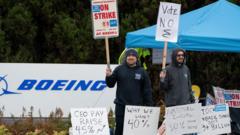
Striking Boeing workers have decisively rejected the aviation company’s latest offer, which included a substantial 35% pay increase spread over four years. The International Association of Machinists Aerospace Workers (IAM) revealed that 64% of its striking members voted against this proposed deal. Since the onset of the strike on September 13, over 30,000 Boeing employees have participated in the walkout, largely in response to dissatisfaction with previous offers.Boeing's CEO, Kelly Ortberg, cautioned that the company is facing a "crossroads," facing staggering losses approaching $6 billion (£4.6 billion). Union representatives responded to the rejection by highlighting the importance of workplace democracy and emphasizing the consequences of years of mistreatment toward employees. Notably, this marks the second time striking workers have turned down a proposed agreement, with a previous offer receiving a 95% rejection rate.As CEO since August, Ortberg has expressed urgency in stabilizing the company and repairing its tarnished reputation following numerous manufacturing and safety issues. The company’s commercial aircraft division reported an operational loss of $4 billion in the last quarter, alongside nearly $2.4 billion lost in its defense sector. He acknowledged the company’s overwhelming debt and customer disappointment due to systematic performance issues.The crisis at Boeing ignited earlier in the year when a severe in-flight incident involving one of its passenger jets occurred, further damaged by a failed mission of its Starliner spacecraft, which required an unscheduled return without carrying astronauts. The ongoing strike has aggravated Boeing's production hindrances.While Ortberg noted the company has a backlog of around 5,400 aircraft orders, he warned investors that resuming factory operations following the strike will be complex. He emphasized the critical need for a detailed return-to-work strategy to ensure a smooth transition back to production.Earlier this month, Boeing announced plans to reduce its workforce by approximately 10%, and many employees are currently on a rotating furlough due to the strike's impact on operations, which has also extended to suppliers. His first priority remains shifting the corporate culture to foster better collaboration and proactively address underlying issues.