
In brief
As winter temperatures plunge to frigid levels in Gaza, heartbreaking stories emerge of infants tragically succumbing to the cold. One such story is that of little Sila, who passed away just weeks after birth, underscoring the dire humanitarian crisis faced by families in the region.
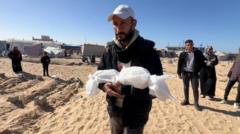
In a tent on the beach in southern Gaza, Nariman al-Najmeh recalls the devastating moment she discovered her daughter, Sila, unresponsive. "I woke up and told my husband that the baby hadn't stirred for a while. She was blue, with blood coming out of her mouth," she explains. Displaced by the ongoing war, the family has been forced to relocate more than ten times over the last fourteen months. Nariman speaks of the struggle through her pregnancy, expressing worries about how to care for her soon-to-arrive child amid the dismal socio-economic conditions exacerbated by the conflict. Living in a camp designated by the Israeli military, Nariman’s family faces appalling living conditions in the “humanitarian area” of al-Mawasi, where poor infrastructure and flooding from the nearby Mediterranean add to their sufferings. Sila’s father, Mahmoud, describes chilling nights huddled together for warmth. Yet even this wasn't enough to protect the newborn from hypothermia. Health authorities report that Sila was one of six infants who died from hypothermia within just two weeks, as nighttime temperatures drop to 7C (45F). Gaza’s healthcare system is stretched thin, with hospitals dealing with an influx of newborns affected by the harsh climate and malnutrition among mothers, complicating their ability to provide adequate care. Harrowing accounts from other families, including that of Yehia al-Batran, reveal a grim reality where infants are buried due to preventable conditions linked to inadequate shelter and resources. “All eight of us, we don’t have four blankets between us," Yehia lamented, as he carried his frozen baby son Jumaa, also taken by the cold. As the war continues to rage, organizations like UNICEF have raised alarms about the urgent need for relief and protection for vulnerable children. The chilling prospect of further loss looms large as conditions grow increasingly unbearable. With the sound of drones overhead, families like Sila’s grapple with loss and illness, caught between the horrors of war and the harsh realities of winter. Nariman's somber reflection encapsulates the struggle: "If we don't die from the war, we're dying from the cold.”


