In brief
The integration of over 50 driverless trucks in Rio Tinto's Greater Nammuldi iron ore mine reflects a groundbreaking shift in mining operations. These autonomous vehicles enhance safety and productivity, reshaping workforce roles while prompting discussions on the future of employment in the industry.
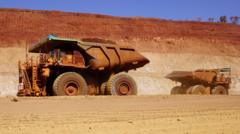
In the remote terrain of Western Australia’s Pilbara region, a revolution is unfolding at Rio Tinto’s Greater Nammuldi iron ore mine, where over 50 autonomous trucks, each capable of hauling a staggering 300 tonnes, are transforming traditional mining practices. Situated two hours north of Perth, this expansive operation employs around 400 workers who are flown in for shifts lasting between four to eight days before returning home. The presence of these massive, driverless vehicles, comparable in size to townhouses, evokes both awe and apprehension.During a recent site tour, I observed the autonomous trucks navigating the mine’s red-earth roads with precision, their operations controlled by sophisticated technology that allows them to follow pre-defined routes without human intervention. This significant leap toward automation includes not just the trucks but also a water cart affectionately known as “Henry,” which assists in dust suppression throughout the site.Central to this automated environment is a high-accuracy GPS system, ensuring that both the autonomous trucks and our manually driven vehicle can coordinate safely. Before entering the mine’s autonomous zone, our vehicle logged onto a virtual system, receiving real-time updates about vehicle movements within the vicinity, an innovation designed to enhance safety and operational efficiency.Perth’s Operations Centre (OC), located 1,500 km away, acts as the nerve center for a fleet of over 360 self-driving trucks across 17 mines in the region. Despite the advanced technology in use, jobs within the industry are evolving rather than disappearing; many workers have transitioned to monitoring roles, utilizing their experience to oversee operations from the OC. The focus has shifted to reskilling rather than redundancy, with controllers managing autonomous units and re-trained personnel operating different machinery.Matthew Holcz, managing director of Rio Tinto’s Pilbara mines, highlights safety as the primary motivation for this shift towards automation. “The data clearly shows that, through automation, we've achieved a significantly safer business,” he asserts, noting a 15% improvement in productivity thanks to constant operational capabilities unaffected by shifts or breaks.However, the journey toward total automation presents challenges. Experts like Robin Burgess-Limerick, who studies human factors in mining, suggest that better interface designs are required for the control systems, as lapses in situational awareness can still occur. Additionally, the high-stress nature of remote operation can lead to manageable yet concerning workload burdens for controllers.Concerns over over-trust in automation further highlight the need for ongoing vigilance and continuous improvement in equipment design. The complexities of interactions between humans and automated systems mandate that mining companies remain diligent, as illustrated by a recent incident involving an autonomous train collision.In conclusion, as Rio Tinto's automation efforts continue to expand—bringing in more trucks and trials of unstaffed equipment—the conversation around the implications of technological advancement for the workforce remains critical. The juxtaposition of human intuitiveness against robotic efficiency underscores the evolving nature of the mining industry. As I awaited my rescheduled flight back to Perth, I reflected on the intricate balance of human and machine that defines today's mining landscape. It's a testament to how, even in a world of automation, the human element remains irreplaceable.