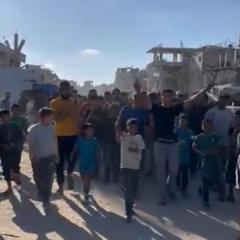
Article Text: Over the last three days, the streets of southern Gaza have become a battleground for protests against Hamas, as crowds gather to demand an end to the ongoing war and call for the armed group's removal. In videos circulating on social media, protesters can be heard chanting, "Out! Out! Out! All of Hamas, out!" in a powerful show of defiance.
Protesting against Hamas is a precarious act in Gaza, where many journalists have received threats warning them to refrain from disseminating any adverse reports that could undermine public morale. Activists report that the protests initially began on Monday, led by young individuals, who were later joined by others seeking food from community kitchens. Many protesters expressed their fury towards Hamas leadership, particularly after a controversial podcast interview featuring senior official Sami Abu Zuhri gained traction online. In that interview, Zuhri proclaimed the conflict with Israel to be "eternal," igniting further outrage among the populace.
Young demonstrators in Khan Younis conveyed their frustration through pointed rebukes of Hamas, with one insisting that the group has "sold their blood for a dollar." Despite the rising anger, Hamas has maintained a firm grip on the south, effectively stifling public dissent until this recent surge of protests.
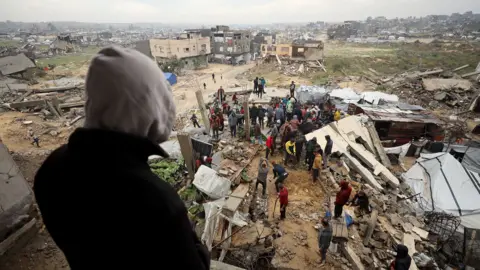
International journalists, including those from the BBC, face barriers imposed by Israel which restrict their ability to report from Gaza—compounding the challenges of gauging public sentiment regarding Hamas. This comes amid escalating violence, with Israel conducting daily air strikes in Khan Younis since the onset of protests and issuing evacuation orders for city residents.
Alaa, a protester who spoke on the condition of anonymity due to fear of retaliation, highlighted the desperation fueling the protests: "The people do not care any more about Hamas' attempts to suppress their voice because they are literally dying from hunger, evacuation, and the bombings." Having been displaced around 20 times during the past 19 months, Alaa underscored the need for change, declaring that Hamas must leave to give rise to new forms of resistance.
While public unrest against Hamas remains a daunting endeavor—illustrated by the tragic case of 22-year-old Oday a-Rubai, who was murdered after protesting—Alaa's account reflects a growing urgency amongst the people of Gaza for foreign intervention and an end to hostilities to ensure a peaceful future for their children.
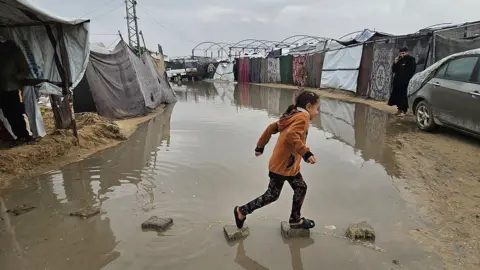
With over 57,000 individuals reported displaced in southern Gaza since mid-May, and with more than 53,000 lives claimed since the conflict began, the stakes remain perilously high. Attacks on protesters serve as sobering reminders of the risks involved, yet many see no other option as they push back against what they perceive as Hamas’ failure to protect or provide for the people of Gaza.
Protesting against Hamas is a precarious act in Gaza, where many journalists have received threats warning them to refrain from disseminating any adverse reports that could undermine public morale. Activists report that the protests initially began on Monday, led by young individuals, who were later joined by others seeking food from community kitchens. Many protesters expressed their fury towards Hamas leadership, particularly after a controversial podcast interview featuring senior official Sami Abu Zuhri gained traction online. In that interview, Zuhri proclaimed the conflict with Israel to be "eternal," igniting further outrage among the populace.
Young demonstrators in Khan Younis conveyed their frustration through pointed rebukes of Hamas, with one insisting that the group has "sold their blood for a dollar." Despite the rising anger, Hamas has maintained a firm grip on the south, effectively stifling public dissent until this recent surge of protests.
International journalists, including those from the BBC, face barriers imposed by Israel which restrict their ability to report from Gaza—compounding the challenges of gauging public sentiment regarding Hamas. This comes amid escalating violence, with Israel conducting daily air strikes in Khan Younis since the onset of protests and issuing evacuation orders for city residents.
Alaa, a protester who spoke on the condition of anonymity due to fear of retaliation, highlighted the desperation fueling the protests: "The people do not care any more about Hamas' attempts to suppress their voice because they are literally dying from hunger, evacuation, and the bombings." Having been displaced around 20 times during the past 19 months, Alaa underscored the need for change, declaring that Hamas must leave to give rise to new forms of resistance.
While public unrest against Hamas remains a daunting endeavor—illustrated by the tragic case of 22-year-old Oday a-Rubai, who was murdered after protesting—Alaa's account reflects a growing urgency amongst the people of Gaza for foreign intervention and an end to hostilities to ensure a peaceful future for their children.
With over 57,000 individuals reported displaced in southern Gaza since mid-May, and with more than 53,000 lives claimed since the conflict began, the stakes remain perilously high. Attacks on protesters serve as sobering reminders of the risks involved, yet many see no other option as they push back against what they perceive as Hamas’ failure to protect or provide for the people of Gaza.