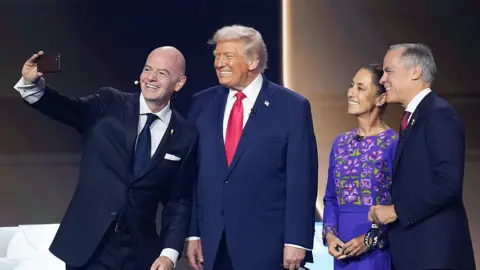
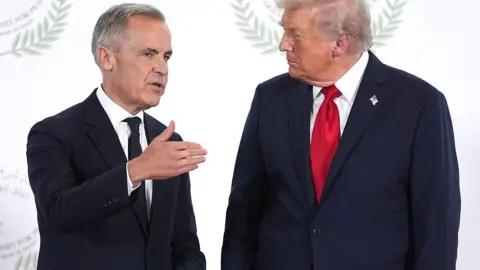
President Trump recently questioned the relationship between the United States and Canada during a social media statement ahead of Canadian Prime Minister Mark Carney’s visit to Washington. The President indicated disbelief in the mutual benefits of the trade relationship, suggesting that Canada unfairly gains from their partnership.
This skepticism stems from Trump's assertion that the U.S. is “subsidizing” Canada, which he claims amounts to $200 billion. However, this figure misrepresents the actual trade deficit data, which recorded a more accurate deficit of $63.3 billion last year. Furthermore, an analysis excluding Canada’s energy exports reveals that the U.S. actually enjoys a trade surplus with its northern neighbor.
Trump's narrative emphasizes a belief that American industries could thrive without Canadian imports such as cars, energy, and lumber, stating, “We don’t need their Cars, we don’t need their Energy, we don’t need their Lumber, we don’t need ANYTHING they have, other than their friendship.” This posture is evidenced by the tariffs imposed on various Canadian products, reflecting a clear signal of withdrawal from bilateral cooperation.
The underlying question emerges: does the U.S. genuinely require Canada? As political tensions rise, both leaders appear to be navigating a complex landscape that could redefine trade opportunities between the two nations.