
In brief
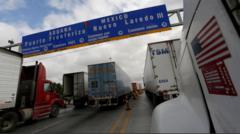
Former President Donald Trump has laid out a plan to impose significant tariffs on goods from Mexico, Canada, and China from the first day of his presidency, set to begin on January 20. In a series of posts on his Truth Social platform, Trump stated that a 25% tariff on goods from Mexico and Canada and a 10% tariff on Chinese imports would be enacted until those nations addressed issues of illegal immigration and drug trafficking, particularly the smuggling of the opioid fentanyl.
These tariffs signify a potential escalation in relations with the United States' top trading partners. Trump emphasized that tariffs on both Mexico and Canada would remain until they made demonstrable efforts to tackle drug-related issues. He remarked, “Both Mexico and Canada have the absolute right and power to easily solve this long-simmering problem. It is time for them to pay a very big price!” Reactions from China suggest a strong denial of any wrongdoing in the trade of fentanyl. A spokesperson for the Chinese embassy in Washington stated, “the idea of China knowingly allowing fentanyl precursors to flow into the United States runs completely counter to facts and reality,” while reiterating that cooperation between the U.S. and China benefits both sides and warns that neither party would gain from a trade war. The Biden administration has also urged China to curtail production related to fentanyl, which recently claimed nearly 75,000 American lives. In Trump's election campaign, he threatened tariffs reaching as high as 100% on imports from Mexico and China, a tactic much more aggressive than measures taken in his first term. Additionally, he has indicated intentions to revoke China’s most-favored-nation trading status with the U.S.Economist Stephen Roach described these tariff threats as part of Trump's strategy to use tariffs as instruments of policy enforcement. In response to inquiries about Trump’s true stance on trade, Treasury Secretary nominee Scott Bessent suggested the tariffs could serve as a negotiation tool, indicating that Trump’s approach might be “escalate to de-escalate.”With these prospective tariffs, critics note that Trump may be violating stipulations outlined in the US-Mexico-Canada Agreement (USMCA) that ensures a mostly duty-free trading dynamic between the three nations. Meanwhile, both Mexico and Canada have expressed their commitment to maintaining stable trade relationships with the U.S., highlighting the importance of the USMCA framework for national and international investments.



