
In brief
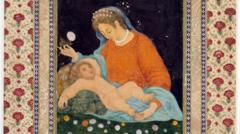
This article delves into the rich tradition of Indian artists who, inspired by their cultural milieu, depicted the birth of Jesus Christ through a distinctive lens, integrating Islamic aesthetics and local narratives, thus challenging Western-centric representations of this pivotal event.
The birth of Jesus Christ is a cornerstone of Christian tradition, often portrayed by Western artists through a specific lens conditioned by prevailing aesthetic values. However, Indian artists, influenced by their own rich cultural heritage, have depicted this seminal event in unique styles that reflect local traditions and beliefs. These interpretations serve not only as religious representations but also as artistic expressions that give depth to the Christian narrative in India.Historically, Mughal emperor Akbar played a critical role in bridging cultures by inviting Jesuit missionaries to his court, marking a significant intersection of Islamic and Christian traditions. This led to the creation of artworks that showcased the nativity through an indigenous perspective, often infused with Islamic artistic elements. Historians, like Neha Vermani, highlight the significance of a particular painting depicting emperor Jahangir in a nativity scene, emphasizing the Mughal rulers' identity as 'just' rulers who fostered a spirit of coexistence across different religions.The art of India also saw the emergence of renowned figures such as Jamini Roy and Angelo de Fonseca. Jamini Roy’s works blend Bengali folk art with Christian themes, reflecting a narrative where Christ resonates with local tribal figures, bridging the gap between cultures. Roy's recognition of Christ's simplicity and sacrifice highlights his relevance across diverse belief systems.Similarly, Angelo de Fonseca's interpretations present a reimagined Virgin Mary, who embodies the essence of Indian womanhood, challenging Western ideals of beauty and representation. His artistry draws from Indigenous influences to situate Christianity within a broader Indian context, effectively redefining its narratives for local audiences.Through these multifaceted portrayals, Indian artists have not only preserved the essence of the Christ's birth but have also provided a fresh viewpoint that integrates local customs and artistic styles, inviting a deeper understanding of the linkages between tradition and faith. This artistic legacy stands as a testament to the richness of Indian culture and its contributions to global religious narratives.