In brief
The public's reaction to President Yoon Suk-yeol's martial law declaration highlights the scars left by decades of authoritarian rule, prompting widespread concern over a potential regression in democratic freedoms.
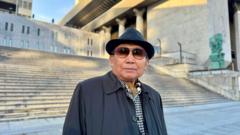
In South Korea, a nation that has painstakingly built its democratic identity, President Yoon Suk-yeol's recent declaration of martial law has sparked a wave of anxiety and disbelief among its citizens. At 87, Koh Jae-hak fondly recalls witnessing soldiers ruthlessly firing upon peaceful protesters back in April 1960, a dark chapter that continues to haunt those who lived through it. With a history marked by 16 periods of martial law and a legacy of dictatorship, many South Koreans view democracy as a hard-fought privilege.Yoon's announcement, the first under established democratic governance in 45 years, triggered immediate backlash. Lawmakers quickly scrambled to the national assembly to reverse the order, while citizens courageously protected parliament from troops called to enforce the decree. Initially justified by Yoon as a response to "pro-North anti-state" sentiment, skepticism loomed as he provided no evidence to back his claims. The public speculated that he was merely seeking to suppress political opponents, echoing justifications provided by past leaders for martial law imposition.Historical recollections reveal a grim pattern of suppression, media control, and violent crackdowns on dissent during previous martial laws. The infamous Gwangju uprising in 1980 stands as a tragic example, as protests against military rule culminated in a bloody military response leading to hundreds of deaths—a founding scar on the national psyche. The eventual movement towards democracy in 1988 was a critical turning point, but the unresolved trauma remains palpable among generations.Activist Kelly Kim voiced the collective dread, asserting that most Koreans carry deep psychological scars from those tumultuous episodes. Even younger South Koreans, such as 15-year-old Kwon Hoo, voiced their terror despite having never lived under martial law, showcasing the legacy's resonance through familial storytelling. The anxiety surrounding possible curfews and restrictions underscored the public's fear of lost freedoms.Amidst the turmoil, a segment of the population holds a nuanced perspective. Some older South Koreans, like 83-year-old Kang Hyo-san, reflect on past martial law as necessary for stability in an era fraught with ideological conflict. They conveyed that without military intervention, the establishment of democracy could have faltered. However, both Kang and Koh condemned Yoon's current iteration of martial law as unfounded and unjustifiable.The artistic expression of South Korea's recent history has allowed the nation to explore its past sins through film and television, fostering a societal commitment to preserving democratic values. As society collectively reinforces its commitment to freedom, the declaration of martial law serves as a stark reminder of the need for vigilance against tyranny. Ultimately, citizens underscored that the price of democracy was paid dearly, and they refuse to allow history to repeat itself.