
In brief
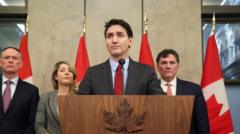
Following President Trump's announcement of steep tariffs on Canadian imports, Canadian sports fans voiced their frustration by booing the U.S. anthem. Prime Minister Trudeau urged solidarity among Canadians, sparking a wave of local purchasing and protests against American goods as rising tensions hint at a trade war.
The recent announcement by U.S. President Donald Trump to implement significant tariffs on imports from Canada has stirred a wave of discontent among Canadians, evidenced vividly during recent sporting events. At an NHL game in Ottawa, hockey fans audibly booed the Star-Spangled Banner, and a similar scene unfolded during the Toronto Raptors' game against the Los Angeles Clippers, where the Canadian crowd let their emotions drown out the anthem’s rendition by a young singer.The 25% tariffs on Canadian goods, which include a lowered 10% tax on energy products, are set to begin on Tuesday. This unexpected decision has sent shockwaves through Canadian society, raising fears of an impending trade war. Canadian leaders and citizens reacted furiously, expressing outrage that such measures would strain relations between the two nations that have long enjoyed close economic ties.Prime Minister Justin Trudeau addressed the situation with a heartfelt call for solidarity, noting, "Now is the time to choose Canada." His speech prompted discussions among citizens about actively supporting local businesses and boycotting American products. Social media is buzzing with guides on avoiding U.S.-made products, and some Canadian provinces, notably Ontario, are pulling American alcohol from the shelves indefinitely.The tariffs, projected to affect everyday costs for Americans as well, pose a particularly intricate threat to Canada, where reliance on U.S. trade is substantial. Economists predict the tariffs could plunge the country into a recession, warning that prolonged trade hostilities could result in rising prices for Canadians.Political leaders across Canada have condemned Trump's decision. Former Liberal Party leader Michael Ignatieff described it as a shock to Canadian national identity, while Conservative Party leader Pierre Poilievre argued vehemently against the justification for such actions. Trudeau echoed these sentiments, questioning why the U.S. was targeting a longstanding ally rather than addressing more challenging adversaries.As this 'destabilizing' scenario unfolds, experts suggest Canada’s strategy will need to shift toward salvaging the relationship with the U.S., despite the looming uncertainty surrounding the duration of the tariffs. In response to American narratives about fentanyl trafficking and trade deficits, Canada asserts its stance, emphasizing the minuscule percentage of illicit drugs and illegal border crossings attributed to the nation.Amidst this backdrop, the future of U.S.-Canada relations hangs in the balance, as both nations grapple with economic, political, and social ramifications of this unprecedented move. Prime Minister Trudeau reiterated Canada’s desire for diplomatic resolutions while making it clear that when push comes to shove, the country is prepared to defend its interests robustly.

