In brief
Israel’s latest general election has left the country without a clear governing majority. Netanyahu’s right‑wing coalition is close to a 53‑seat breakthrough, while the opposition led by Gadi Eisenkot stands at 48. Arab parties, including the Joint List and Ra’am, are projected to secure a record 19 seats, making them pivotal to any future coalition.
On Tuesday, voters across Israel cast ballots in a race that has become a turning point in the nation’s politics. After months of preliminary counts, no single party or bloc has secured the 61 seats required to form a government, while the Arab coalition is projected to claim a record 19 seats, the largest share for Arab parties in decades.
According to the Central Elections Committee, 5.7 million of the 7.3 million eligible voters turned out, a 77.7 percent turnout that eclipses every post‑war election in the country since 1999. The high participation also underscored the intensity of the vote, with the Arab minority itself reporting more than 80 percent turnout — an unprecedented surge.
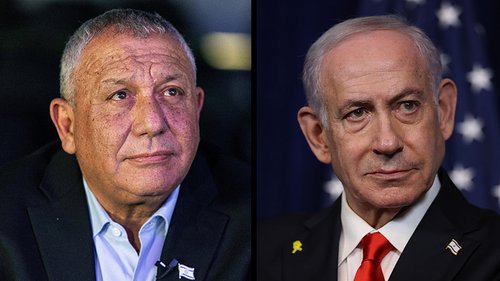
The preliminary seat distribution shows Prime Minister Benjamin Netanyahu’s right‑wing coalition, built largely around the Likud party, poised for 53 seats; the Likud party alone is expected to command 26 seats. The opposition coalition, spearheaded by former military chief Gadi Eisenkot, remains at 48 seats, short of an outright majority in the 120‑member Knesset.
Arab political organisations, the Joint List and the United Arab List (Ra’am), together appear set to secure 19 seats, a historical high for Arab representation. That figure has evolved from earlier estimates of 17 seats as more ballots were tallied. The record seat haul comes against a backdrop of a growing Arab electorate and years of mounting pressure from minority communities on the governing established order.
Netanyahu addressed his supporters after claiming a decisive victory among the Jewish and Zionist electorate. “We must establish a strong, right‑wing, national government,” he said, emphasizing that Likud is the “largest party in Israel.”
Eisenkot took to social media late Tuesday to articulate his reaction. “The preliminary poll results point to the complete distrust in Netanyahu and the government of Oct. 7, of the Zionist majority and the majority of Israeli citizens,” he wrote. “If these are the final results, this is a victory for the statist‑Zionist majority in Israel.”
Market Reaction and Currency Moves
Tel Aviv’s stock markets experienced a sharp sell‑off amid the burgeoning uncertainty. The TA‑35 index fell 1.81 percent, while the TA‑125 dropped 2.46 percent. Gad Lior, a senior analyst with the Israeli daily Yedioth Ahronoth, attributed the decline to “political uncertainty and concerns that another Netanyahu‑led government might again struggle to address economic challenges.”
"The sell‑off was driven by political uncertainty and concerns that another Netanyahu‑led government might again struggle to address economic challenges," said Gad Lior.
While traders focused on stocks, the Israeli shekel depreciated, weakening to 3.128 per U.S. dollar and falling 1.62 percent against the dollar according to the Bank of Israel’s official rates.
Joseph Freiman, CEO of Israeli financial group Prico, noted that the shifting election counts altered the shekel’s early gains. “Most projections during the election day favored the opposition bloc,” he explained, “however, as vote counting progressed, Netanyahu’s bloc gradually took the lead, triggering a reversal in currency market sentiment.”
Negotiation Outlook and Future Paths
With no coalition in place, President Isaac Herzog will begin consulting party leaders next week to recommend a prime ministerial candidate who can build a majority. The designated leader will have a twenty‑eight‑day period — with a possible fourteen‑day extension — to assemble a workable cabinet. Failure to do so could result in a new election, while a time‑bound caretaker government would oversee daily operations.
Mansour Abbas, leader of Ra’am, has openly expressed hopes that the final results offer the anti‑Netanyahu bloc the “61 seats required to form a government.” He added that his party has been approached by both major coalitions before and after the vote.
"With the numbers we have now, there is no government," Abbas told Israel’s Channel 12 before preliminary votes began trickling in.
Alon Pinkas, a former Israeli ambassador, warned of the inherent challenges in keeping Arab parties out of any government, noting that “there’s a price to pay” because Arab parties can’t be excluded when strategic alliances are necessary.
The final results are expected by Thursday evening, after the completion of counting the remaining 500,000 double‑envelope ballots cast by soldiers, diplomats and other voters geographically distant from their registered polling stations. Those numbers could shift the seat tallies enough to alter the balance of power and determine the next government’s composition.
As the nation watches the count unfold, the stakes remain high: the outcome will decide whether Israel remains governed by a hard‑right coalition or opens the door to a broader, more inclusive coalition that incorporates Arab parties in ways never before seen in the country's parliamentary history.