In brief
Trudeau's comments reflect growing anxiety in Canada regarding US trade policies and geopolitical dynamics.
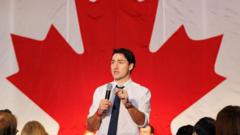
In a startling statement during the Canada-US Economic Summit held in Toronto, Prime Minister Justin Trudeau expressed his belief that former President Donald Trump’s idea of annexing Canada is a serious possibility. Speaking to a gathering of business leaders, Trudeau remarked that Trump's desire to absorb Canada could stem from seeking access to essential minerals.Trudeau's comments, which were captured by an open microphone, indicate a shift in how Canada interprets Trump's previous remarks about Canada being the "51st state." The summit, attended by over 100 business leaders and policy experts, was hosted by the Canadian government's newly formed advisory council regarding Canada-US relations. These revelations come on the heels of Trump's threats to impose significant tariffs on Canadian exports, prompting heightened tensions between the two countries.During the summit, Trudeau referenced Trump's previously suggested 25% tariffs on most Canadian exports, highlighting concerns about the economic ramifications. Although Trump has since provided Canada and Mexico a short reprieve regarding these tariffs, threats remain a source of anxiety within Canada. Trump's social media posts and remarks have further fueled these tensions, as he implied that annexation could be a solution to avoid tariffs.Trump's comments about integrating Canada have not been taken lightly and reflect broader concerns about US-Canada relations. While initial reactions from Canadian officials dismissed Trump’s suggestions as jokes, Trudeau’s remarks signify a shift towards viewing the US as a more unpredictable partner. Recent polls indicate that 80% of Canadians oppose becoming a US state, raising questions about the feasibility and future of such proposals.The possible annexation idea has triggered reactions across Canada, with citizens and officials alike decrying it as an untenable prospect. Many Canadians rely heavily on trade with the US, with about three-quarters of their exports flowing southward. In response to threats, some Canadian provinces are promoting "buy local" initiatives to mitigate the economic fallout.Amid the escalating tensions, Canadian officials are also attempting to foster better relations with the US, particularly in energy cooperation. Energy Minister Jonathan Wilkinson has been proactive in forging alliances on critical minerals, underlining the importance of collaboration for mutual prosperity.At the summit, Trudeau addressed the long-term challenges posed by current US politics, emphasizing the necessity for Canada to bolster its economy and trade partnerships in the coming years. The ongoing situation reflects a complex interplay of economic dependence and political uncertainty in Canada-US relations.