In brief
With a pivotal election approaching, various opposition groups in Georgia frame the contest as a definitive choice between aligning with Europe or succumbing to Russian influence—a reflection of the long-standing anxieties stemming from past conflicts.
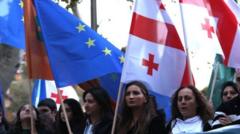
Ahead of Georgia's monumental election on Saturday, the stakes are incredibly high as citizens confront their nation's tumultuous relationship with Russia and the possibility of rejoining the European community. The memory of the five-day war in 2008 lingers heavily for many Georgians, particularly in the regions impacted by Russian military actions, such as Gori and Shindisi. Now, as four opposition parties engage the electorate, they present this election as a choice between Russia and Europe, hoping to end the twelve-year reign of the ruling Georgian Dream (GD) party.Mindia Goderdzishvili, a campaign leader in Gori for the opposition group Coalition for Change, reflects on the repercussions of the 2008 war, stating, “In these streets we had Russians.” This painful history is being manipulated, he argues, as the current government seeks to exploit the electorate's emotions to maintain power. However, the GD party, helmed by billionaire founder Bidzina Ivanishvili, contests this narrative, positioning itself as the party of peace while accusing the opposition of inciting a return to conflict.Maka Bochorishvili, chairperson of Georgia's EU integration committee, expresses the profound insecurity that pervades the nation, emphasizing, “I don’t think anybody can guarantee Georgia’s security today.” Despite GD's commitment to EU membership by 2030, skepticism remains, particularly after recent laws perceived as detrimental to civil liberties have stalled the integration process. EU ambassador Pawel Herczynski has noted that “instead of getting closer, Georgia is moving away from the European Union.”In a bid to bolster opposition support, Georgia’s pro-Western President Salome Zourabichvili has openly urged voters to back the candidates aiming for reform. As anticipation mounts, the focus intensifies on Ivanishvili, who has threatened to ban opposition parties and reiterated his stance on the 2008 conflict, placing blame on past leadership instead of Russian aggression.Amid these political challenges, younger Georgians are questioning the government's priorities, yearning for a focus on economic revitalization rather than political infighting. Concerns over creeping Russian influence loom large, and the Kremlin's preference for Georgian Dream adds another layer of complexity to the electoral landscape.In contrast to the burdens of the past, many Georgians gravitate toward a European future, showcasing their desire to distance themselves from historical ties to Russia. As Election Day approaches, the question remains: who will emerge as leaders ready to navigate Georgia toward a more promising alignment with Europe?