
In brief
The struggle to maintain Jodhpur's cherished blue homes in Brahmapuri emphasizes the enduring challenge of preserving cultural heritage amidst modernization and climate change.
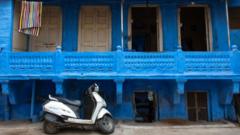
In the vibrant city of Jodhpur, India, the legendary blue neighborhood of Brahmapuri is experiencing a shift that threatens its unique character. Nestled beneath the towering Mehrangarh Fort, this area has long been celebrated for its azure residences, a striking testament to the city's history and culture. The blue hue, believed to have gained prominence in the 17th century, has transformed Brahmapuri into a defining symbol of Jodhpur, attracting tourists from around the globe.Esther Christine Schmidt, an assistant professor at Jindal School of Art and Architecture, notes that the blue homes symbolize the community’s upper-caste origins, where blue was chosen as a mark of sociocultural integrity within the Hindu caste framework. Similar to the blue city of Chefchaouen in Morocco, which was established as a refuge from the Spanish Inquisition, these homes also served a practical purpose. The mixture of blue paint and limestone plaster not only offered a cooling effect but also drew in visitors enchanted by the neighborhood's stunning visuals.However, the bright blues of Brahmapuri are beginning to fade under a variety of pressures. Historically, the blue pigment was derived from the abundant indigo found in the region, primarily sourced from Bayana in Rajasthan. Unfortunately, the cultivation of indigo depletes the soil, leading to a decline in its use over time. Furthermore, shifting climatic conditions have rendered the blue paint less effective in combating rising temperatures. Udit Bhatia, an assistant professor of civil engineering at the Indian Institute of Technology, Gandhinagar, highlights that Jodhpur's average temperatures have risen significantly, from 37.5°C in the 1950s to about 38.5°C by 2016. This drastic change necessitates more modern cooling solutions like air conditioning, making the traditional blue homes less appealing.The transition to darker paint colors not only exacerbates the heat retention problem, creating uncomfortable heat islands, but also indicates a broader trend of urbanization that often neglects traditional practices. Aditya Dave, a civil engineer from Brahmapuri, explains that the costs of preserving blue homes have skyrocketed in recent years when compared to past prices, making it less feasible for many residents to maintain this part of their heritage.Concerned locals, such as garment seller Deepak Soni, are increasingly vocal about the need to preserve the blue legacy. Drawing parallels with Chefchaouen's success, Soni has lobbied local authorities to restore and maintain the blue color of homes. Since 2019, he has successfully raised funds to ensure that a dedicated number of homes retain their iconic hue each year.Currently, estimates indicate that around half of the approximately 33,000 homes in Brahmapuri are still blue. Soni continues to advocate for the application of lime plaster as a sustainable solution to facilitate the restoration of the color. His efforts symbolize the community's call to action, provoking deeper discussions on the importance of maintaining cultural heritage in an age increasingly dominated by modern influences."Why would people care about our city if we don't care about its heritage?" he asks, encapsulating the sentiment of those aware of the cultural and historical significance of Jodhpur's unique identity. The transformation of Brahmapuri serves as a poignant reminder of the delicate balance between progress and preservation in a rapidly changing world.
