
In brief
As Donald Trump gears up for his awaited second presidency, his recent choices for key appointments signal a strong focus on hardline immigration policies, a tough stance on China, and a prioritization of presidential power over legislative collaboration.
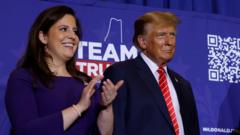
With Donald Trump's election for a second term nearly complete, the contours of his upcoming presidency are quickly coming into focus. His selection of Congresswoman Elise Stefanik as the U.S. ambassador to the UN indicates an aggressive approach towards foreign policy, particularly concerning China. In stark contrast to his chaotic first term, Trump is demonstrating a more strategic approach as he assembles his White House team and formulates his early agenda.**Strong Immigration Stance** The choices Trump is making around immigration signal a commitment to his long-promise campaign agendas, including mass deportation of undocumented migrants. Appointing Stephen Miller as deputy chief of staff for policy likely assures that aggressive immigration measures will dominate his policies. With Thomas Homan returning as the “immigration tsar,” Trump's administration seems poised to run the most robust deportation operation in U.S. history, despite critics highlighting the potentially staggering financial repercussions.**Aggressive Foreign Policy** Parallel to immigration, Trump's appointments suggest a looming confrontation with China. His national security adviser pick, Florida Congressman Mike Waltz, has publicly described the U.S.-China relationship as a "cold war," while Stefanik has accused China of significant interference in U.S. elections. As the early pieces fall into place, it appears Trump intends to continue the confrontational approach toward China characteristic of his first term, perpetuated further by strong voices such as Marco Rubio in the State Department.**Influential Figures Beyond the Cabinet** In addition to his official appointments, non-political advisors hold substantial sway in Trump's administration. Elon Musk's presence at his Mar-a-Lago transition headquarters signifies the blend of technology and governance. Musk will head efforts to streamline government operations, leveraging his substantial resources and political ties to bolster Trump’s agenda. Meanwhile, the endorsement of Robert F. Kennedy Jr. suggests Trump is keen on enlisting prominent figures outside traditional Republican circles to enhance his administration's influence.**Concentration of Power** Trump's approach thus far demonstrates a preference for consolidating power within the executive branch, as evidenced by his push for recess appointments that bypass Senate approval. This method could limit collaboration with Congress, raising concerns among advisers regarding the potential fallout for his legislative ambitions if too many Republicans are extracted from Congress for administrative roles.**Loyalty Over Experience** Unlike his first term—where he leaned on establishment Republicans—Trump is now surrounded by loyal allies, such as South Dakota Governor Kristi Noem and Fox News host Pete Hegseth, who reflect his unwavering support. While some former critics of his presidency have transitioned into key roles, maintaining loyalty will be critical as pressures mount throughout his term.As Trump readies himself for a second enactment of his political vision, these early decisions may well define his governance style and set the stage for potentially tumultuous political battles ahead.

