
In brief
Justice Chandrachud's retirement raises questions about his impact on India's judicial landscape, with many praising his progressive rulings while others criticize his relationship with the government and perceived lack of assertiveness.
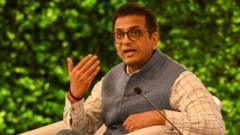
Justice Dhananjay Yashwant Chandrachud, who retired as India’s 50th chief justice recently, left the judicial realm pondering the legacy of his tenure. In the weeks leading up to his departure, he expressed concerns about his achievements and the historical impact of his judgements. As one of the most prominent judges in the world, overseeing the judicial proceedings for over a billion citizens, he became a figure of debate, stirring both admiration and criticism.His tenure lasted over eight years on the Supreme Court, with the last two years as chief justice. Chandrachud was often hailed as India's "first celebrity judge" and garnered headlines not just for his rulings but for his personality. His tenure was marked by a dynamic approach to judicial reform, notably by spearheading efforts towards digitisation and the live streaming of court proceedings, greatly enhancing public access to the judicial process.However, while praised for his progressive rulings - such as decriminalising homosexuality and promoting gender and LGBT rights - critiques emerged regarding his approach towards the government. Critics argue he failed to challenge state power effectively, showcasing a dichotomy in his judgements where he sometimes sided with governmental interests, especially in high-stakes political matters.Chandrachud’s appointment created high expectations, coming at a time when the judiciary faced scrutiny for its independence amidst accusations against the ruling Bharatiya Janata Party (BJP) government. Activists and top lawyers hoped his leadership would reinvigorate judicial integrity, yet some view his performance as disappointing. Senior lawyer Kamini Jaiswal expressed concerns that his potential was not fully realized, noting a perceived lack of assertiveness.As the “master of the roster,” Chandrachud was also criticized for the prolonged incarceration of political activists. This aspect elicited significant backlash, highlighting shortcomings in achieving justice for many awaiting trial.In recent months, public attention shifted from his court decisions to his associations outside the courtroom. Viral videos showed him participating in religious events with PM Modi, raising eyebrows about the neutrality of his position. His comments on divine guidance in judicial matters during a contentious debate about the Babri Mosque-Ram temple dispute further ignited controversy, eliciting reactions on whether such sentiments had any place in judicial discourse.Responding to criticism, Chandrachud asserted the importance of separating the roles of judiciary and executive, while also acknowledging the pressures facing the courts. Despite the criticism, he expressed confidence in the positive contributions he made to the system, highlighting a complex legacy as he departed the bench. His farewell remarks reflected a sense of fulfillment, believing he had left the judiciary in a better state than he found it. As India reflects on his contributions, questions remain about the balance he struck between progressivism and accountability in an evolving political landscape.


