In brief
TV BRA is revolutionizing news broadcasting with a team of reporters who challenge societal norms and emphasize inclusion.
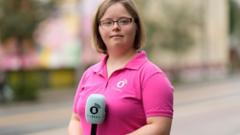
TV BRA, or "TV Good," is making waves as the world's first television station run entirely by individuals with learning disabilities or autism. With its vibrant, shocking pink decor reflecting the personality of its reporters, the station has created a vivid space that stands out in the media landscape. Every week, TV BRA produces an hour-long magazine program that covers news, entertainment, and sports, presented in simplified Norwegian that appeals to its audience of 4,000 to 5,000 viewers per broadcast.The driving force behind TV BRA is Managing Editor Camilla Kvalheim, who started the initiative over a decade ago while working as a teacher in a care home for people with learning disabilities. She facilitated the creation of a platform that allows her team of ten reporters—many with mild learning impairments—to gain skills and share their stories on a national streaming outlet, TV2 play, and the station’s own app.Among the dedicated reporters is Emily Ann Riedel, living in Stavanger, who embraces her role despite the challenges it brings. She speaks of the importance of professionalism, balancing her expressive nature with the need to stay focused on the news: “I have to follow the script… when I work here, I have to be very professional.” The crew records their broadcasts using an autocue system, which they are still mastering. Despite these challenges, Kvalheim maintains high standards, ensuring her team upholds the ethical benchmarks expected of any news outlet. Riedel and her colleagues have a mission that goes beyond traditional broadcasting; they aim to empower their community by addressing issues pertinent to people with disabilities, such as access to support and rights.Segments from TV BRA, like a recent report by Petter Bjørkmo spotlighting the struggles of those with more severe disabilities in accessing essential services, resonate with viewers and enhance awareness. The station advocates for social change, highlighting the unique perspectives of its reporters who have often been overlooked in mainstream media.As TV BRA garners recognition, other regions are taking notice, with similar initiatives popping up across Scandinavia and beyond. According to advocates like Anne-Britt Ekerhovd, a viewer with a learning disability, “They explain things very well.” She emphasizes that the news format of TV BRA is essential for providing accessible information.TV BRA stands not just as a broadcasting station but as a symbol of empowerment and change, redefining the role of individuals with learning disabilities in media. Its contributions are vital for the community, inspiring viewers to see news in an entirely new light and proving that inclusion can reshape narratives on a national scale.