In brief
Zelensky’s cabinet reshuffle to remove defence minister Mykhailo Fedorov has sparked unsettling political fallout. Although a new commander‑in‑chief, Major General Mykhailo Drapatyi, was appointed, protests driven by young Ukrainians still demand Fedorov’s return. Analysts argue the move may weaken presidential authority while the military remains resilient, highlighting tensions between political ambition and Ukraine’s war‑time governance. The turbulence underscores how leadership choices can ripple through public morale and strategic coherence.
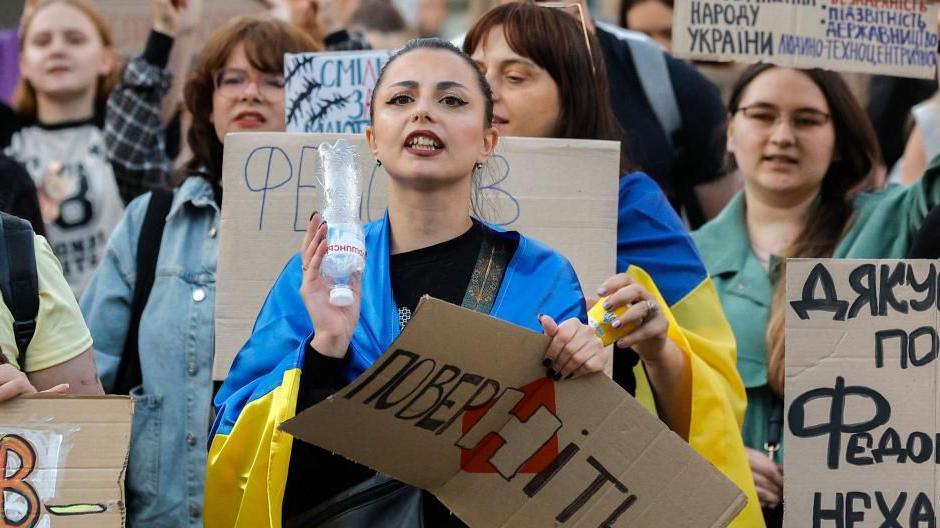
On 15 July President Volodymyr Zelensky announced he would not re‑appoint Mykhailo Fedorov as Ukraine’s defence minister, sparking one of the most intense political crises the country has seen since the 2014 Revolution of Dignity. The decision has ignited daily street protests, with young Ukrainians demanding Fedorov’s return.
In the same week, Zelensky replaced former commander‑in‑chief Oleksandr Syrskyi with Major General Mykhailo Drapatyi – a battle‑proven, modern officer praised for modernising the army’s capabilities. Nevertheless, the fresh appointment has not quelled public dissent.
Fedorov’s bravest fortnight unfolded after he declined all alternative posts offered by Zelensky. In an interview he emphasised his belief that “the only positions that give power over the war are defence minister, commander‑in‑chief or president.” A former deputy, Alina Frolova, echoed that without a ministry one has no budget or real authority to act.
The dismissal has led some analysts to view Fedorov as a rival to Zelensky, sparking fears that he may pursue a presidential bid in a future election – a dangerous strategy given the ongoing annexation and war. Others argue that Ukraine’s war‑time constitution forbids elections, making such ambitions moot.
Zelensky’s supporters claim the president sought to “repair the damage” caused by the reshuffle, but the backlash shows that many young Ukrainians feel the current leadership does not embody their values. “We need to see the hero of the war, the one who fights the corruption and embraces modern technology,” said MP Oleksandr Merezhko.
The public displays of unrest serve as a reminder that a stable political climate is essential for the military’s effectiveness. While the on‑the‑frontline forces continue to hold a 15‑30km (9‑18‑mile) kill zone, the long‑term impact of these leadership changes remains uncertain.
In a Telegram post on Thursday, Zelensky promised preparations for the upcoming winter months, stressing that the “long‑range sanctions” campaign remains in full swing. Analysts agree that, despite political wrangling, Ukraine is unlikely to experience significant setbacks on the battlefield, although the internal crisis continues to test the resilience of its institutions.
Despite the turbulence, many believe the country’s horizontal strength – its solidarity and shared purpose – provides a buffer against deep‑lingual political strain. The consensus: while the damage is real, it may not be humiliating or daunting, and Ukraine’s adaptive culture is likely to keep the war effort on track.