
In brief
Ukrainian President Volodymyr Zelensky has announced a significant leadership change in the Security Service of Ukraine (SBU), replacing Vasyl Malyuk with Maj-Gen Yevhenii Khmara. This move follows Malyuk's notable contributions to counterintelligence operations against Russia but has faced criticism and raised concerns about future effectiveness. Khmara's previous experience in elite operations positions him for the role, yet the decision reflects larger tensions within Ukraine's military hierarchy.
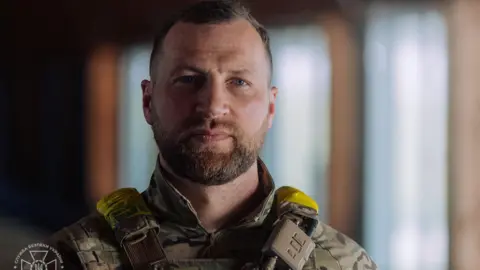
President Volodymyr Zelensky has reshuffled the leadership of Ukraine's Security Service (SBU), replacing influential Vasyl Malyuk and nominating Maj-Gen Yevhenii Khmara as acting head.
The SBU is primarily concerned with internal security and counter-intelligence and, since the beginning of Russia's full-scale invasion in 2022, it has also played a prominent role in assassinations and sabotage attacks deep inside Russia.
Malyuk, who had run the SBU since 2022, gained a reputation for overseeing successful operations against Russia and for purging the SBU from alleged Russian double agents.
The latest reshuffles are the latest in a long series made by Zelensky since the start of the war.
Malyuk's name is known across Ukraine. After all, last June he co-ordinated the daring 'Spider Web' attack, which saw more than 100 Ukrainian drones strike air bases deep inside Russian territory. Khmara, his replacement, was also involved in the preparation of that operation.
So it did not come as a surprise that Malyuk's dismissal earlier this week was widely criticised within Ukraine, including by several high-profile military commanders. The impression that the decision made by President Zelensky was short-sighted was cemented by reports that Malyuk had initially refused to step down voluntarily.
Although he has been dismissed from the position of SBU chief, he has been asked to continue leading special operations against Russia. Ukraine needed more asymmetric operations against Russian forces, Zelensky said, adding that Malyuk was best at this.
Khmara's appointment has gone some way in quelling fears about the SBU's future effectiveness. But former SBU operative Ivan Stupak argues his reputation - though solid - is limited to a certain sphere and that it is unclear whether he will be able to translate his experience to running the wider SBU.
Stupak also believes that Malyuk's dismissal is connected with the appointment of former spy chief Kyrylo Budanov as Zelensky's new chief of staff.
Other analysts disagree. Oleksandr Notevskyi, of the Ukrainian Center for Policy Development, praised Khmara's appointment, pointing out his successes in heading Alpha, one of the top elite divisions of the SBU.
In a statement, the SBU described Khmara as a decorated and experienced special-purpose officer who was involved in liberating the Kyiv region in 2022 and fighting the Russians in the occupied region of Donetsk.
Khmara's appointment will need to be confirmed by the Ukrainian parliament, which may yet reject it. Other options are on the table, Notevskyi said.
After nearly four years of war, Ukraine is struggling to push back Russian forces in the conventional way - on the battlefield and along the long front line in the east of the country. It has had more success targeting oil fields, weapons factories and - as in the case of the Spider Web attack - air bases and valuable aircraft.
At this particular juncture of the war with Moscow, Notevskyi argued, whoever leads the security service should be someone who is specialised in eliminating Russia's military capacities on the territory of Russia.
Last week, Zelensky announced significant changes to his top team. Mikhaylo Fedorov was nominated as new defence minister, while foreign intelligence chief Oleh Ivashchenko replaced Budanov.
Many of Zelensky's reshuffles have been criticised by commentators as damaging to the country at a time of crisis.
Using a football analogy, Stupak argued that Zelensky was like a manager going to the substitute bench for replacements. But his bench is quite short, and he's running out of people to use again and again, he said.
