In brief
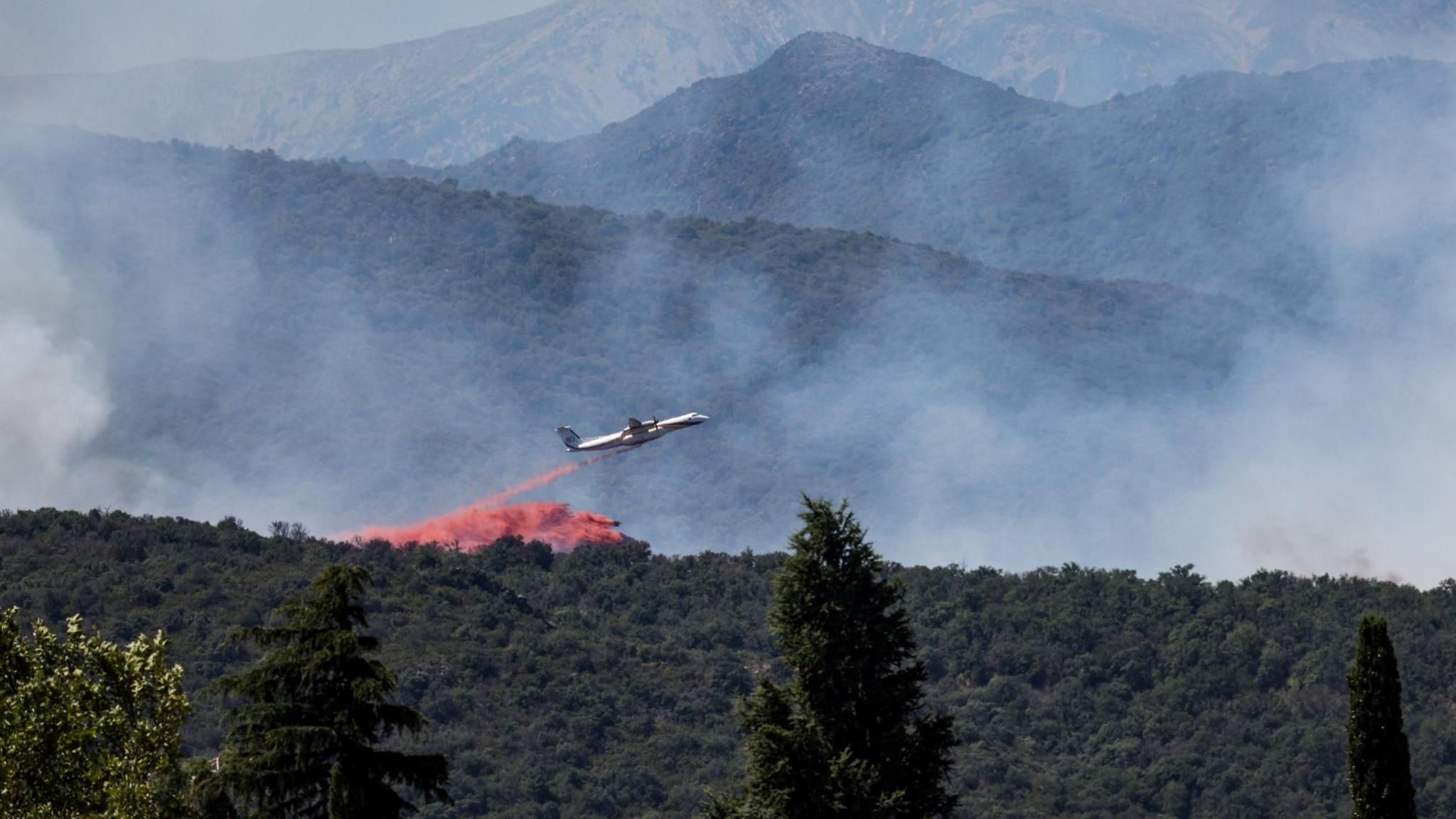
A fierce wildfire in the French Pyrenees has forced the evacuation of more than 10,000 residents across a dozen villages, risking the final stage of the Tour de France. The blaze, covering some 4,600 hectares, was fueled by early summer heat and strong winds. European authorities are deploying aircraft from Cyprus and Sweden to help fanned firefighting, while neighboring Spain reports similar losses. The heatwave persists with temperatures climbing beyond 40°C, heightening fire danger across the region.
A catastrophic fire in Trévillach, near Perpignan, has scorched 4,600 hectares of land and prompted authorities to order the evacuation of more than 10,000 people from a dozen small towns and villages in the foothills of the French Pyrenees, at the crossroads with Spain.
Local prefect Pierre Regnault de la Mothe posted on X that the blaze had spread faster than expected, advancing within 300 metres of houses and reaching a 5‑minute “staggering” pace that shocked residents. Interior Minister Laurent Nunez warned on TF1 that the conditions were deteriorating again, stating that “Today the battle resumes.” The fire’s behaviour is amplified by high winds, which officials say could fan the flames further.
European Commission President Ursula von der Leyen announced that four aircraft stationed in Cyprus and Sweden would be dispatched to support the emergency response, joining a range of resources already on scene, including ground crews and aerial water drops. The spread has spilled into neighboring Spain, where more than 2,200 hectares were destroyed in the natural reserve of Les Gavarres. Catalan authorities reported that the blaze was stable and would be fully contained during the week.
The wildfire also interfered with the commercially celebrated Tour de France. Fans were urged to stay away from the finish line of the third stage, which ends in Les Angles, as officials reorganised routes to allow emergency vehicles to access the area. Race director Christian Prudhomme emphasised that “an exceptional fire calls for exceptional measures” and that fans should avoid the finish site and the final 40 km of the stage.
Heatwave conditions continue to press the region. Forecasts predict temperatures reaching 40°C again in south‑west France this week, with adjoining areas in Portugal and Spain already hitting similar extremes. BBC Weather Lead Forecaster Matt Taylor noted that the heat is likely to persist into next week, without widespread rainfall, keeping fire risk elevated across the continent.
The current heatwave mirrors June’s record‑breaking surge that saw France hit its hottest day ever on 24 June, causing more than 2,025 excess deaths nationwide. Climate change is raising the intensity and frequency of such events in Europe, which is warming twice as fast as the global average, according to the Copernicus climate service. The result is more severe heatwaves, higher water‑stress levels, and an increase in intense wildfires across the continent.