
In brief
Min Aung Hlaing’s visit to China marks a pivotal moment as it underscores the heavy political dynamics at play in Myanmar's ongoing civil conflict and Beijing's role as a significant ally.
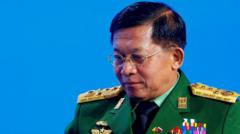
Myanmar’s military chief, Min Aung Hlaing, is currently on his inaugural trip to China since the 2021 coup that ousted the democratically elected government led by Aung San Suu Kyi. This visit comes amid significant military losses for his regime against various insurgent groups, which raises questions about his future in power. Although the trip is not recognized as a formal state visit, it reflects China's ongoing position as Myanmar's key ally and largest trading partner.Min Aung Hlaing arrived in Kunming, Yunnan province, with a substantial entourage of officials and business representatives, to participate in a minor summit under the Greater Mekong Sub-region banner. This gathering of authoritarian leaders, including representatives from Laos, Cambodia, and Vietnam, provides a platform for him, especially as he has faced isolation since the coup, being largely relegated from regional meetings typically attended by Myanmar’s leaders.During this summit, he is set to meet with Chinese Premier Li Qiang, a significant interaction considering the backdrop of Min Aung Hlaing's previous interactions mostly taking place with Russia, another ally. The symbolism of his presence at a summit in China has not gone unnoticed, particularly in light of concerns that Beijing might lessen its ties with the military regime in the wake of a costly civil war.The escalating conflict has raised alarms in Beijing, especially given that insurgent groups have inflicted notable defeats on the Myanmar military, with some groups targeting illegal operations affecting Chinese citizens. In light of this, China has attempted to curb the insurgents’ movements to stabilize the situation and prevent the complete collapse of the military government in Nay Pyi Daw.Observers note that China seems to be advocating for a timeline for elections as part of its broader strategy, aiming to restore cross-border trade while safeguarding its extensive investment interests. However, many insurgent groups reject any negotiation with the military leadership, insisting that future governance in Myanmar must be civilian-led with a new federal structure established.The National Unity Government (NUG), representing the ousted elected officials, has criticized China's invitation to Min Aung Hlaing, asserting that it lends legitimacy to a regime they believe must be removed from power to achieve peace and stability in Myanmar. NUG spokesperson Kyaw Zaw cautioned that such recognition could mislead the Myanmar populace regarding China’s intentions.Despite the opposition's efforts, significant challenges remain for those resisting the junta, leading China to adopt a pragmatic approach. Fears of increased chaos if the junta collapses motivate Beijing to continue collaboration with Min Aung Hlaing's government, amidst an environment where Western influence is diminishing, and regional bodies like ASEAN have struggled to effect change. Currently, China stands as the primary influential state capable of attempting to mediate a resolution to Myanmar's ongoing civil strife.


