In brief
This article delves into the intricate process of making Olympic ice, showcasing the role of ice masters, the importance of water purity, external factors that can affect ice quality, and the variations needed for different winter sports. With insights from experts, it highlights the unique demands of ice for curling, figure skating, and speed skating as the 2026 Winter Olympics approach.
Olympic ice describes the uniform ice surface specified for international competitions, including the Winter Olympics.
Skilled technicians known as 'ice masters' are responsible for creating and maintaining this critical playing surface, which must meet rigorous standards for various sports including curling, ice skating, and ice hockey.
The ice hockey arena in Milan-Cortina was built from scratch for the upcoming men's and women's matches following delays and last-minute construction work. This time, however, a temporary venue for long track speed skating will be utilized for the first time in Olympic history.
But how is Olympic ice made? The process begins with a foundation of five centimeters of insulation laid over a concrete floor, followed by a vapour barrier and mats containing glycol that help to keep the ice cold. Once boards and glass walls are erected, approximately two inches of water are added to create the initial ice sheets. This layer is then painted white and sealed, with markings for ice hockey applied, before topping it off with an additional three to four centimeters of water. Temperatures are meticulously controlled between -5 and -4°C.
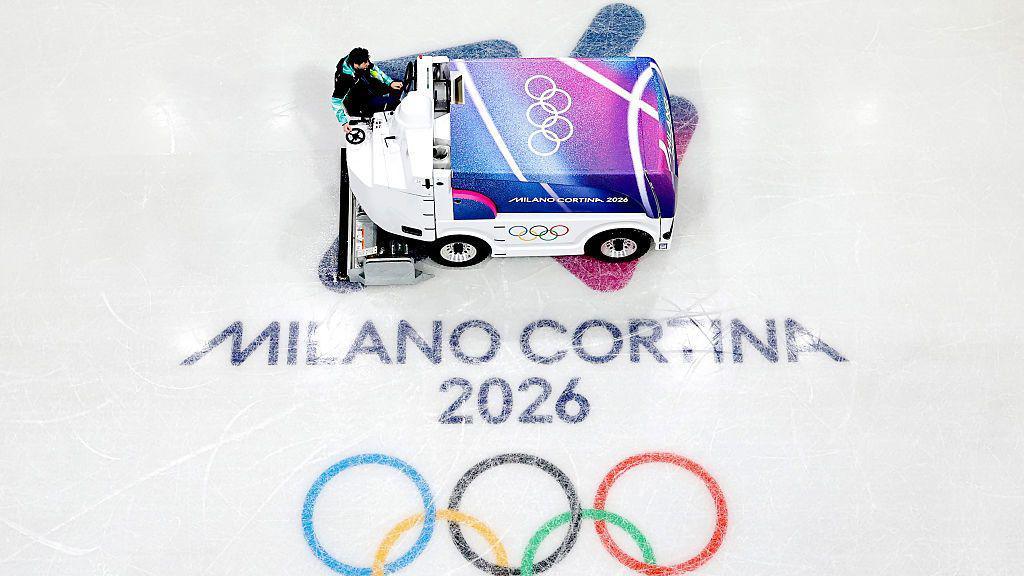
Resurfacing machines, commonly called Zambonis, are utilized to maintain a smooth surface during competitions. Ice master Mark Messer, overseeing the long track speed skating venue, remarked that the biggest challenge in this high-profile event is working with a new system with little preparation time.
As the Games approach, different ice formats will be required to match the demands of each sport. For instance, curling requires a pebbled ice surface achieved by spraying water droplets, while ice hockey necessitates a harder surface for rapid stopping. Similarly, long track speed skating demands a thin and hard, cold surface. Notably, figure skating and short track speed skating will occur in the same venue, requiring technicians to adapt the ice surface within three hours.
The purity of water also plays a crucial role in the quality of the ice. Ice masters must analyze pH levels and total dissolved solids to ensure optimal ice so that it does not cloud or break apart.
External factors such as rapid temperature changes, venue lighting effects, and audience presence can all significantly influence ice performance. Messer notes that variations in air temperature, humidity, and even the resurfacer operator's actions can alter the final ice condition.
This article enriches our understanding of the meticulous preparations behind Olympic ice, essential for athletes striving for excellence on the global stage.