Somali football referee Omar Abdulkadir Artan, the 34‑year‑old who earned CAF men’s referee of the year in 2025, was turned away at Miami International Airport on Monday. The United States cites “association with suspected members of terror organisations” as the reason for denial, even though Artan was travelling on a diplomatic passport and a single‑entry US visa.
According to a Trump administration source, the Customs and Border Protection agent found derogatory information on his record that made him ineligible under the Immigration and Nationality Act. The decision to refuse admission was phrased as a protection of the US from security threats.
Artan’s status as the first Somali referee in a World Cup finals had been confirmed when he was selected as one of 52 referees for the 2026 tournament. The choice was celebrated by CAF and the Somali Football Federation, who praised his record of fairness on the pitch.
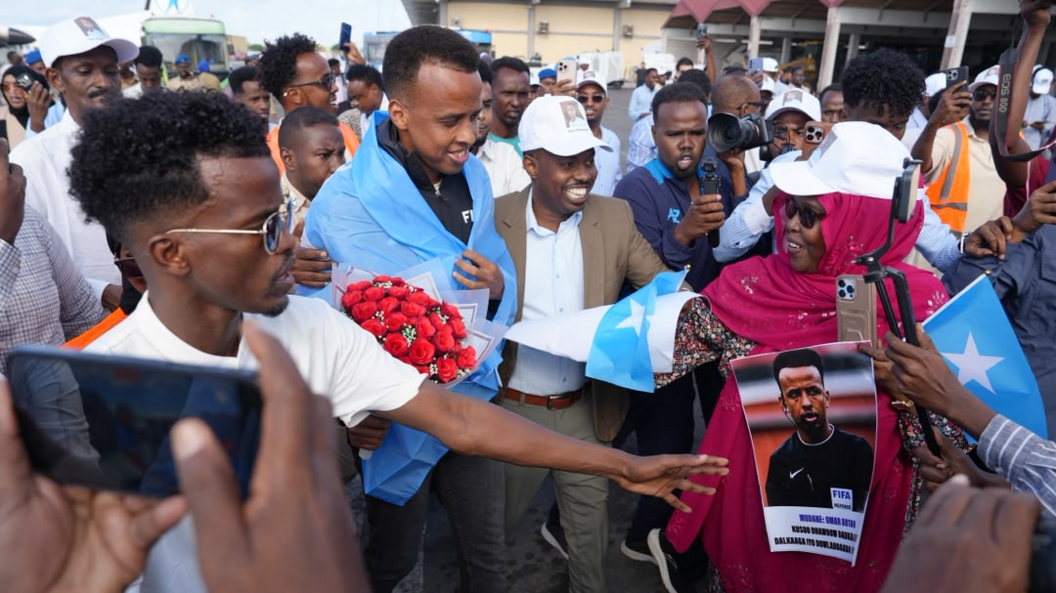
After the denial, Artan returned to Somalia on Wednesday, where he was greeted by government officials, representatives of the Somali Football Federation, and local fans. He met President Hassan Sheikh Mohamud at the Presidential Palace and participated in a public event at Mogadishu Stadium before a local match.
When asked for comments, Artan declined to take questions but recorded a statement for the BBC, thanking his country and world supporters. He emphasized that his ambition remained to be part of the 2030 World Cup and urged Somali youth not to lose hope amid adversity.
The case has highlighted the enduring reach of Trump’s 2025 travel ban list, which still covers Somalia. The ban has faced criticism for its broad scope, especially following comments in 2025 where the former president described Somalia as “a country that runs around killing each other” and suggested immigrants should “go back to where they came from.”
Artan’s experience has prompted questions about FIFA’s control over officiating appointments and how political pressures intersect with the sport’s global governance. Stakeholders are now debating whether World Cup referees should face additional scrutiny or whether their selections can remain independent of national security lists.
More on the story can be found in related coverage and analysis of the World Cup’s scheduling and the broader impact of international travel regulations on sporting events.