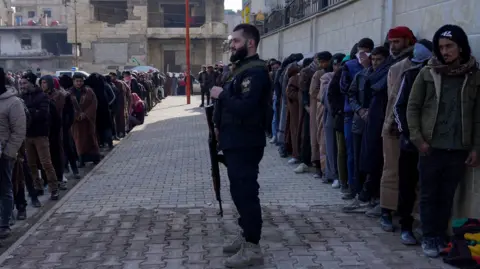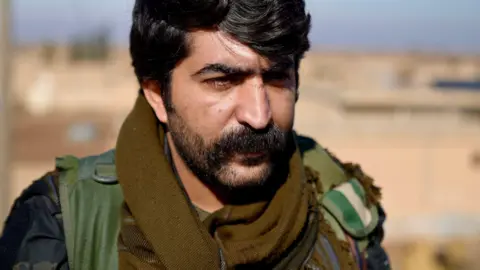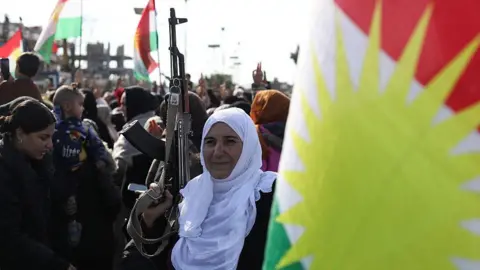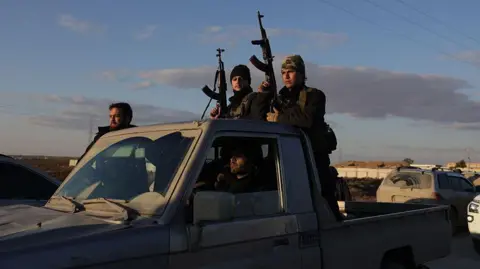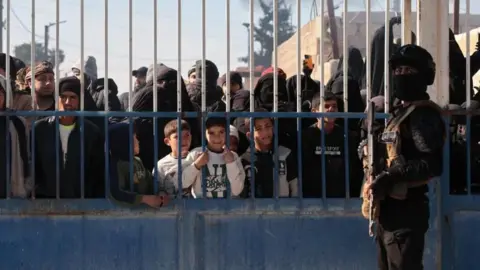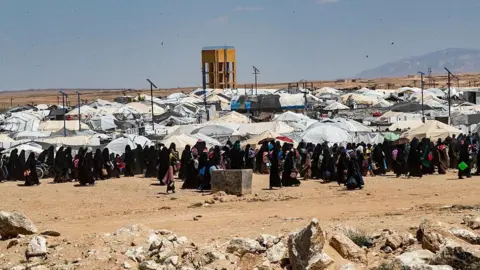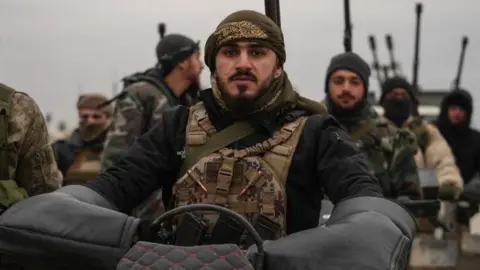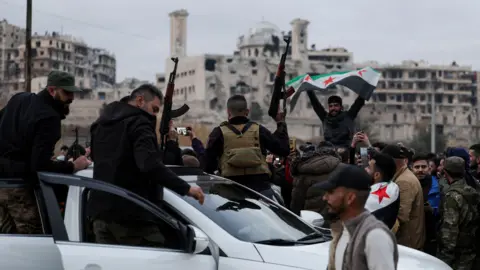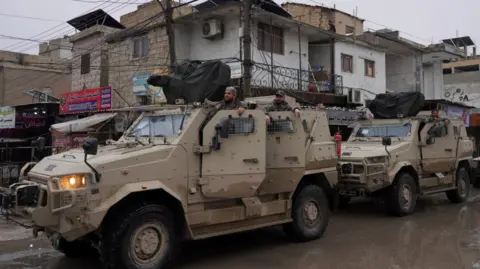
Syrian troops fighting Kurdish forces in north-eastern Syria have seized the country's largest oilfield. The Omar facility and nearby gas fields are under army control after the Kurdish-led Syrian Democratic Forces (SDF) pulled back, officials and monitors say. Earlier the army captured the strategic Tabqa dam on the Euphrates river.
The push came after the SDF announced it would redeploy east of the Euphrates, following deadly clashes last week. That withdrawal followed talks with US officials.
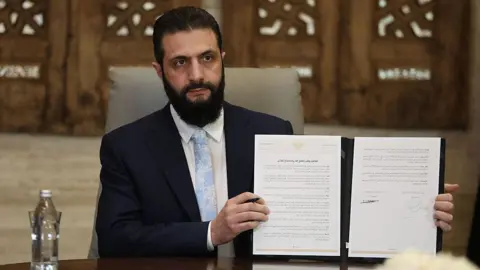
Ongoing fighting in the area stems from the breakdown of an agreement between SDF and the government of President Ahmed al-Sharaa, who is seeking to integrate Kurdish bodies into Syrian institutions.
On Friday, in an apparent goodwill gesture, al-Sharaa said he would make Kurdish a national language and make the Kurdish new year an official holiday. The decree is the first formal recognition of Kurdish national rights since Syria's independence in 1946.
The US-backed SDF subsequently announced its pullout east of the Euphrates river. Kurdish forces have been controlling swathes of Syria's oil-rich north and north-east, much of it gained during the fight against the Islamic State group over the past decade.
Over the weekend, Syrian troops continued their eastward push, entering the town of Tabqa and the nearby dam. Syrian officials later announced the seizure of the Omar oil field, significantly impacting the SDF's revenue.
The Syrian Observatory for Human Rights confirmed the SDF’s withdrawal from entire villages in the eastern countryside of Deir Ezzor province, signaling a major shift in control.
Amid escalating conflicts, the Syrian authorities have accused the SDF of timely sabotage, including the destruction of bridges across the Euphrates River. Recent clashes witnessed several casualties, further complicating the ceasefire efforts reportedly brokered by the US.
These developments highlight the precarious balance of power in the region, with President al-Sharaa's recent strategies aimed at integrating Kurdish factions into the Syrian governance structure still struggling for implementation after almost a year since their initial agreement.