In brief
Serbian students have galvanized the country with marches from all corners of Serbia, forming the ‘Student List‑Students Win’ coalition that threatens long‑standing leader Aleksandar Vučić. The movement emerged after the 2024 Novi Sad train‑station collapse exposed governmental corruption. As a snap election turns the country into a referendum on its future, questions of electoral fairness and media freedom loom large. Even as Vučić calls on voters to maintain stability, the Student List boasts a diverse roster of experts, including cardiologists, actors and former bank governors.
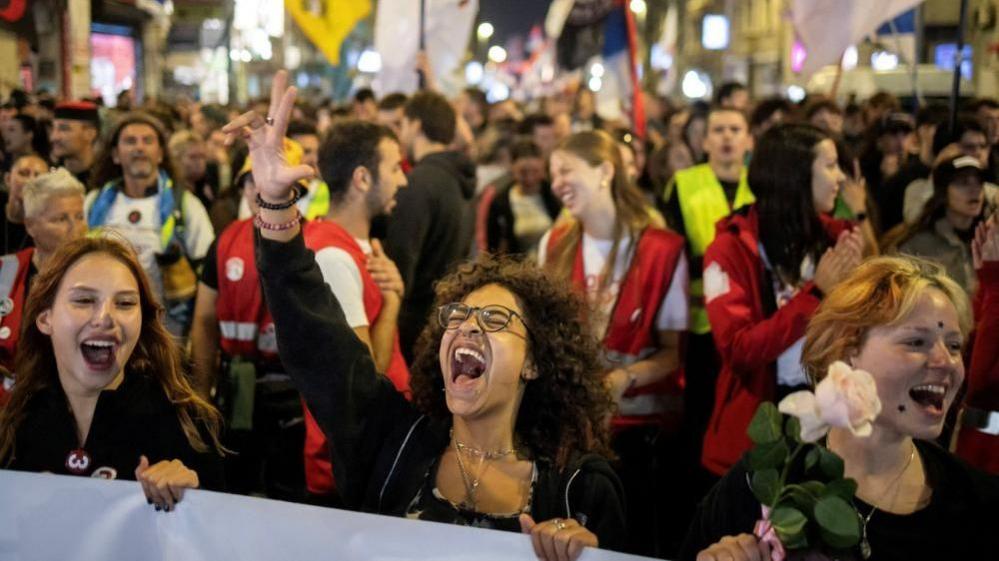
Serbian students have taken to the streets of Belgrade and beyond, converging in a unified push to dismantle Aleksandar Vučić’s 12‑year rule.
After two years of weekly demonstrations, students organized a national campaign culminating in a march from diverse regions of the country. The Assembly of the Student List – “Students Win” – coincides with a snap parliamentary election that many say is a referendum on Serbia’s political future.
The movement roots in the tragic collapse of a concrete canopy at Novi Sad train station in November 2024, which killed 16 people and was widely blamed on corruption within the government. The incident ignited a wave of public anger that evolved into a broader call for accountability.
Candidate Credentials
The Student List’s “lead” is cardiology professor Ilija Srdanović, but the list also includes former basketball star Dejan Bodiroga, actor Tihomir Stanić, and former National Bank of Serbia governor Dejan Šoškić. Their platform is aimed at eradicating corruption, reforming media, and eliminating political patronage in public enterprises.
Electoral Landscape
Serbia’s 250‑seat parliament is elected via a single national proportional‑representation list. Six and a half million citizens are registered; voters choose party lists between 07:00 and 20:00 on election Sunday. The Student List competes against 18 lists, but only seven run a full slate of 250 candidates. Many opposition groups have allied with the Student List in a bid to present a united front against SNS.
Fairness Concerns
European observers note a “tense and divisive” atmosphere, while local watchdogs flag security threats, media suppression and uneven resource allocation to candidates. The Election Commission claims impartiality, but criticism persists over uneven coverage favouring government figures.
The outcome of this election may redefine Serbia’s trajectory, as students and everyday citizens voice a demand for clean governance and respect for democratic institutions.