In brief
Amid a stark increase in Islamophobic incidents in Australia, the Muslim community in Sydney's Lakemba suburb came together to celebrate Eid with a communal Iftar, showcasing unity and the importance of community support during challenging times.
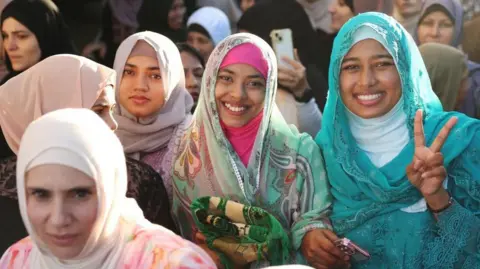
As sunset approached in the south-western Sydney suburb of Lakemba, the street outside the Imam Ali bin Abi Taleb Mosque filled with thousands of people celebrating Eid with a communal Iftar—the evening meal that breaks the daily fast during Ramadan. Although the gathering emanated a family-friendly atmosphere, a police surveillance trailer served as a sobering reminder of rising Islamophobia, leading community leaders to request enhanced police presence during Ramadan due to threats faced by the community.
Gamel Kheir, secretary of the Lebanese Muslim Association that organized the Iftar, emphasized the critical need for communities to unite amidst challenging times. If ever there was a need for communities to come together and break bread, I would say this year is more important than ever, he stated.
In stark contrast to this sense of community, statistics reveal a disturbing rise in Islamophobic incidents. The Islamophobia Register Australia notes a staggering increase of 636% in reported incidents following the October 2023 Hamas attacks on Israel, elevating the average to 18 cases per week, a dramatic rise from 2.5 cases weekly.
This surge in Islamophobia has not only impacted Muslims but has also coincided with a rise in antisemitic incidents, reflecting a troubling climate of racial and religious tension in Australia. Prominent community leaders, including Kheir, lamented the normalisation of racism, pointing to the role of political rhetoric in legitimizing such attitudes.
During the Iftar, tensions also spilled over when Prime Minister Albanese and Home Affairs Minister Burke faced criticism from worshippers, illustrating the community's frustration with how political actions have affected perceptions and treatment of Muslims in Australia.
Lakemba remains a pivotal center for Sydney's Muslim culture, housing one of the largest mosques in Australia. With a population where approximately 61% identify as Muslim, the neighborhood exemplifies the multicultural ethos of Australia, although it simultaneously highlights the ongoing struggles against racism and xenophobia. Community advocates argue for urgent political action to combat the rising tide of Islamophobia, asserting that such issues threaten the fabric of Australian society and its commitment to diversity.
As Kheir coordinated the bustling evening—overseeing caterers and organizing meals—he held onto hope for a more inclusive future, reflecting on Australia's traditional motto of a "fair go for all." He cautioned against the identity crises facing many Western nations, warning that the reassertion of dominant cultural narratives often comes at the expense of marginalized communities, including the Muslim populace.