Saudi Arabia's foreign ministry has called for Yemen's southern factions to attend a dialogue in Riyadh, following a dramatic escalation in conflict that has seen the UAE and Saudi Arabia engage in unprecedented confrontations.
Both Gulf nations have historically intervened on behalf of Yemen's government amid the civil war, but recent internal fractures have resulted in them supporting different rival factions on the ground. One faction is now actively pursuing the declaration of an independent state in southern Yemen.
On Friday, the UAE-backed forces announced the commencement of a war, accusing Saudi-supported troops of initiating attacks, including airstrikes carried out by Saudi forces.
The Saudi ministry issued a statement urging the need for a comprehensive conference in Riyadh, inviting all southern factions to discuss solutions to the southern cause. This follows a long-standing conflict that erupted in 2014 and has severely impacted the country, leading to one of the world's worst humanitarian crises.
Yemen's civil war began when the Iran-backed Houthi movement took control of much of northern Yemen, including the capital, Sanaa. The conflict escalated in 2015 when a coalition led by Saudi Arabia launched military operations to restore the government. Despite a ceasefire had recently reduced hostilities, tensions have further evolved with infighting among the coalition forces.
This past December, the Southern Transitional Council (STC) initiated a military campaign in eastern Yemen, seizing control over strategic territories, including oil-rich regions, causing increased alarm for Saudi Arabian security. The coalition has since conducted retaliatory airstrikes against STC military camps.
Tensions reached a boiling point when Yemeni leadership announced the cancellation of a joint defense treaty with the UAE, demanding the withdrawal of Emirati forces, underscoring the complexities of the coalition's efforts and the varying interests at play within Yemen.
A spokesperson for the STC confirmed their long-held ambitions for an independent state in southern Yemen, asserting their right to self-determination despite concerns from neighboring Saudi Arabia regarding potential threats to its national security.
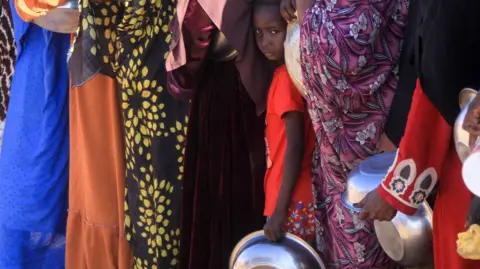
As families in recently contested areas like Hadramawt brace for a potential escalation in conflict, the situation remains dire with ongoing humanitarian needs in one of the poorest countries globally. The Saudi and UAE leadership diverges significantly, complicating efforts for a unified approach to the ongoing wars, thereby threatening the fragile state of Yemen.