
In brief
The ban comes amid allegations of Unrwa staff's involvement with Hamas and threatens essential support systems critical for millions of Palestinians.
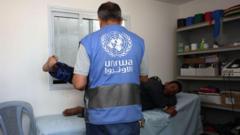
Israel's Knesset has made a controversial decision to ban the United Nations Relief and Works Agency for Palestine Refugees (Unrwa) from operating within its borders and occupied East Jerusalem. This action restricts contact between Unrwa employees and Israeli officials, hampering the agency's ability to deliver vital services in both Gaza and the West Bank, where over two million residents rely heavily on its support.The legislation was passed amid significant outcry, with Unrwa cautioning that the implementation of this law could unravel aid supply chains in a matter of weeks. The Israeli government has justified its decision by reiterating allegations that some Unrwa personnel participated in the brutal Hamas attacks that took place on October 7th, which led to the deaths of 1,200 people. However, the Israeli opposition to Unrwa is longstanding, rooted in historical tensions around the status of Palestinian refugees.Established in 1949, Unrwa was tasked with supporting Palestinians who fled or were expelled from their homes following the creation of the state of Israel. Over the decades, it has evolved into the largest UN agency operating in Gaza, employing nearly 13,000 individuals and providing crucial humanitarian services, including food distribution and medical care. Since the beginning of the current conflict, Unrwa reports that it has reached nearly 1.9 million individuals with food aid and provided close to six million medical consultations, often under perilous conditions.The antagonism between Israel and Unrwa has deep historical roots, fueled by differing narratives regarding refugee rights and historical grievances. Critics in Israel argue that Unrwa perpetuates the refugee status of Palestinians across generations, encouraging aspirations for the right of return, which Israel vehemently opposes. The agency's educational materials have also come under fire, with accusations of anti-Israel bias, prompting calls from the European Parliament for funding conditional upon the removal of controversial content.The recent ban has heightened fears over humanitarian access and aid distribution, particularly given the agency's reliance on cooperation with Israeli authorities for logistics and movement through checkpoints. Unrwa's director has expressed concern that without engagement with Israeli officials, operational viability in Gaza may diminish, placing immense strain on essential services. Furthermore, concerns are being raised that the ban could distort the humanitarian landscape in Gaza, where many agencies depend on Unrwa's infrastructure for their operations.In the wake of the ban, Israeli Prime Minister Benjamin Netanyahu acknowledged the importance of maintaining humanitarian aid in Gaza but reiterated calls for accountability concerning the alleged links between Unrwa employees and terrorist activities. Meanwhile, the U.S. State Department has urged Israel to enhance access for international aid as fears mount regarding the implications of Unrwa's expulsion for millions in need.


