In brief
The Pointe-au-Chien Indian Tribe is actively working to protect its ancestral lands from coastal erosion, utilizing reclaimed oyster shells for reef-building projects and fortifying homes against storms. The tribe aims to sustain its community despite the challenges posed by climate change and land loss.
POINTE-AU-CHIEN, La. (AP) — Cherie Matherne gazed across the Bayou Pointe-au-Chien, where saltwater encroachment has visibly altered the land. Elders recount tales of the lush environments that once flourished in this now-altered landscape.
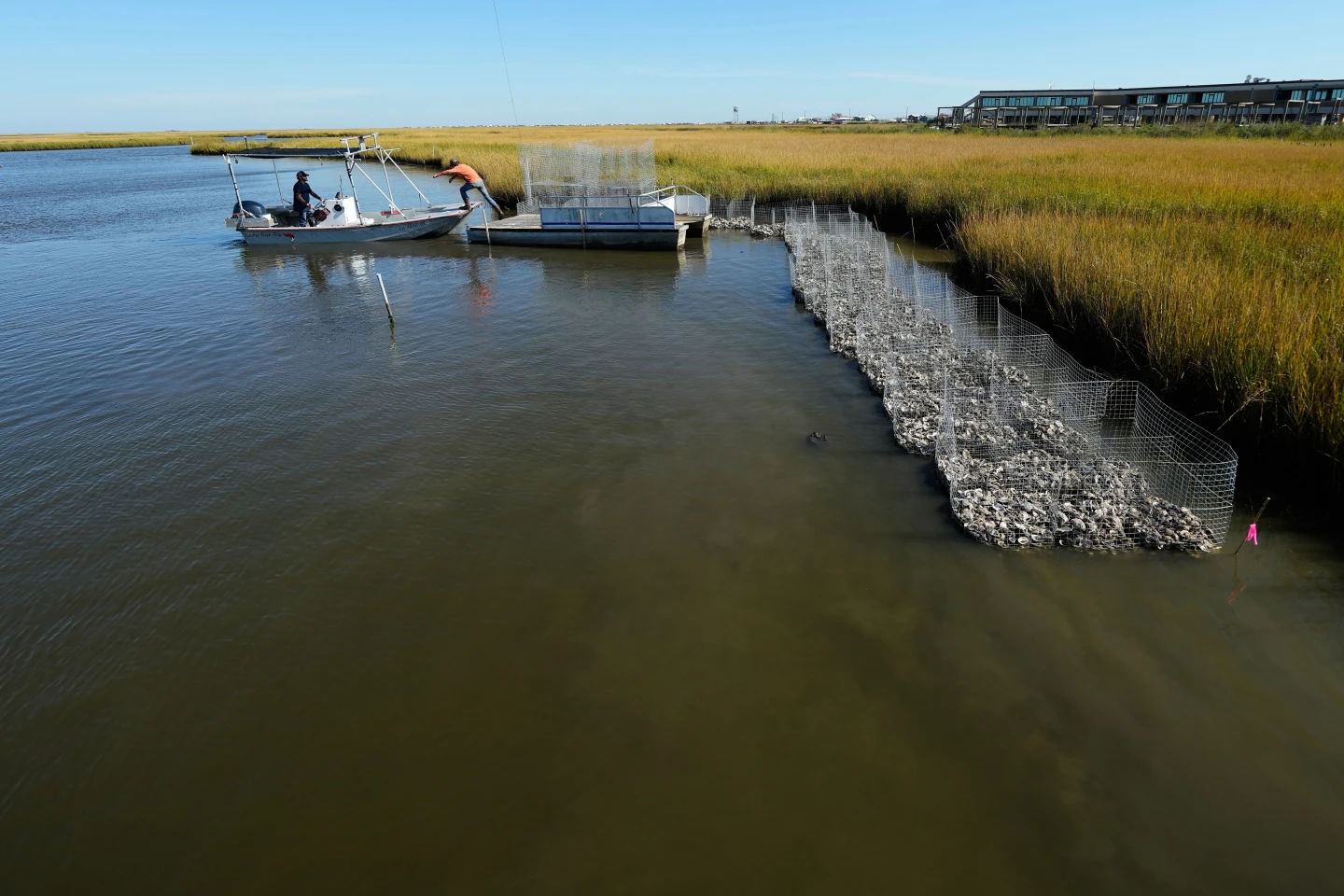
As Louisiana's coastline steadily recedes, the Pointe-au-Chien Indian Tribe, along with other Indigenous communities, is striving to conserve their heritage while adapting to the environmental challenges posed by climate change. They are employing innovative strategies, such as building artificial reefs with recycled oyster shells to mitigate erosion and constructing more resilient homes to withstand extreme weather events.
“We want to be able to make it so that people can stay here for as long as possible, for as long as they want to stay,” said Matherne, the tribe’s director of daily operations. They are motivated by the experience of the Jean Charles Choctaw Nation, which had to relocate due to severe land loss.
The Erosion Crisis at Louisiana’s Coast
Louisiana's coast has been deteriorating due to multiple factors, including levees that disrupt natural sediment flow and saltwater intrusion that devastates freshwater wetlands, thereby accelerating erosion. Groundwater extraction contributes to land subsidence while climate change intensifies the effects of hurricanes and rising seas.
Since the 1930s, Louisiana has lost around 2,000 square miles of land, leading to dire projections that an additional 3,000 square miles may be lost in the next 50 years.
Innovative Solutions: Oyster Shell Reefs
Efforts include utilizing oyster shells reclaimed from local restaurants to create reefs aimed at slowing erosion. Since 2014, more than 16 million pounds of shells have been recycled, reinforcing about 1.5 miles of shoreline effectively.
The Pointe-au-Chien tribe has seen some success with a 400-foot reef built in 2019, resulting in a reported 50% reduction in land loss in areas close to the reefs.
Building to Last
In the wake of Hurricane Ida’s destructive winds, many homes in Pointe-au-Chien were damaged. However, with the aid of organizations like the Lowlander Center, the tribe is reconstructing homes to meet new safety standards including elevated structures, improved hurricane straps, and upgraded electrical systems to withstand potential flooding.
Challenges Ahead
Despite these efforts, the tribe faces challenges such as limited federal recognition, making access to funds and assistance difficult. Moreover, budget cuts threaten their capacity to fortify community infrastructure fully.
As Dardar states, the tribe is dedicated to staying connected to their land and heritage, affirming a strong sense of community and responsibility towards the environment. “This is where our ancestors were, and we feel like we would be abandoning them to leave,” she said. “We have sacred sites that we still visit.”