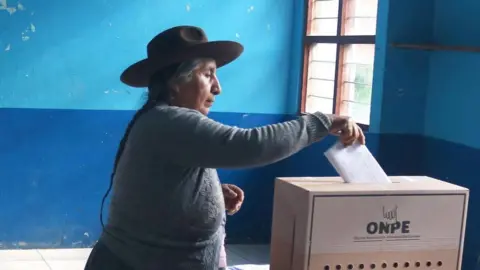
Peru Election Extends Due to Voting Chaos: A Second Day of Ballots
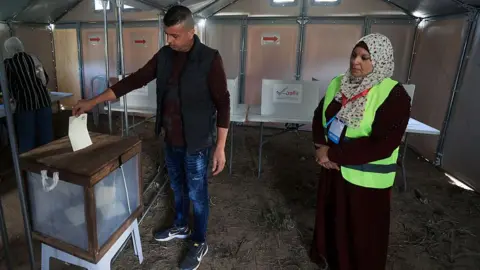
The results of the general election in Peru have been delayed after tens of thousands of people were unable to vote due to technical and logistical problems at a number of polling stations.
The electoral authorities have granted a one-day extension to more than 50,000 voters who could not cast their ballots on Sunday.
A preliminary count of half the votes that were cast has conservative candidate Keiko Fujimori slightly ahead of the right-wing former mayor of Lima, Rafael López Aliaga - but the fight for second place remains intensely competitive.
All candidates are far below the 50% of votes needed to win outright, making a June 7 run-off between the top two candidates nearly inevitable.
Voters facing issues in Lima and abroad, such as in Orlando, Florida and Paterson, New Jersey, will be allowed to cast their ballots on Monday, as decided by electoral authorities.
Numerous polling stations opened late or, in some instances, not at all. Peru's current President José María Balcázar stated that the company hired for delivering voting materials failed to deliver on time.
Mandatory voting for those aged 18 to 70 means that failure to vote can lead to fines. More than 27 million Peruvians were called to vote for both houses of Congress and a new president, positioning the winner to replace the 83-year-old Balcázar, who has been in office only since February.
Peru's political landscape has been shaken by a series of scandals, resulting in the resignations and impeachment of six presidents over the past decade. The last president who served a full term was Ollanta Humala from 2011 to 2016.
The election winner will need to regain the trust of an electorate that remains skeptical of politicians, frequently perceiving them as self-serving amid ongoing political instability.
With 35 candidates vying for the top job, this election will also highlight the significance of the newly re-established Senate, which cannot be dissolved by the president and thus possesses anticipated political power.
Keiko Fujimori, currently leading the counted votes, is running for the fourth time after previously being defeated in three run-offs. As the daughter of controversial former leader Alberto Fujimori, she faces both recognition and resistance from voters concerned about her father's legacy.
Both Fujimori and López Aliaga pledge a firm approach to combat escalating crime rates, while Fujimori declared that the enemy is the left, emphasizing her intent to exclude left-wing candidates from the run-off.
However, exit polls show a competitive race, leaving the possibility for left-wing candidates like ex-tourism minister Roberto Sánchez to secure a spot in the run-off, adding further uncertainty to this crucial electoral event.