In brief
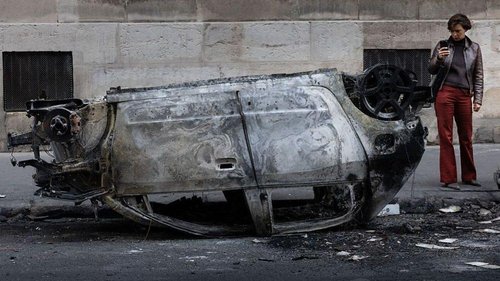
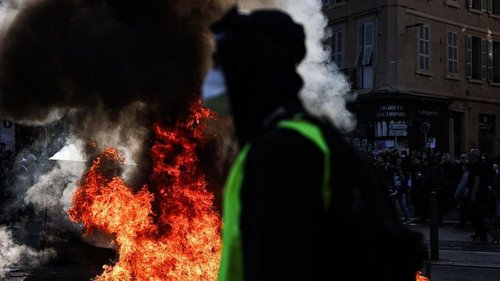
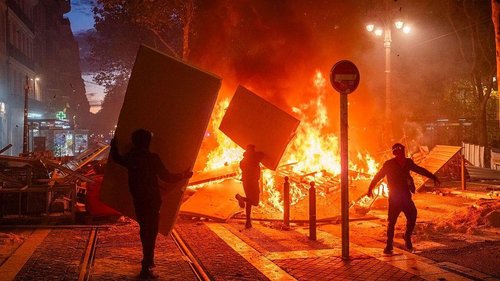
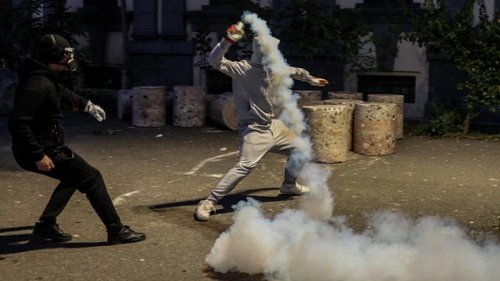
On 18 October, a day of nationwide demonstrations against rising costs erupted into widespread rioting in Paris and other French cities. Hundreds of thousands marched peacefully before a small group of masked rioters set cars ablaze, shattered shop fronts and sparked looting that left businesses destroyed. Police arrested about 1 800 people, injured 150 officers and deployed tear gas and water cannons, while the damage to historic and modern buildings alike sends a grim verdict on the state of public confidence.
Paris woke to scenes of fire and shattered glass as a protest that began peacefully on the streets of southern France turned into a riot that scorched cars, looted shops and left behind a trail of broken windows.
According to French police, roughly 550 000 people marched on Saturday while 1 800 were taken into custody as the demonstration tipped off a violent breakaway group.
The grievances that sparked the protests were steep fuel prices, weak public services and inadequate schooling, all wrapped in an angry message that demanded a tax on the wealthy.
In Paris, Marseille, Lille and other cities, masked rioters set vehicles and shops ablaze; a restaurant on Rue Boursault was gutted by fire and a Mall in Carrefour in Marseille was hit by trash screamed fireworks.
Police fought back with tear gas, water cannons and batons, charging two crowds in central Paris and slamming a car of people into the street; riot police reported 150 officers wounded and rushed to hospital.
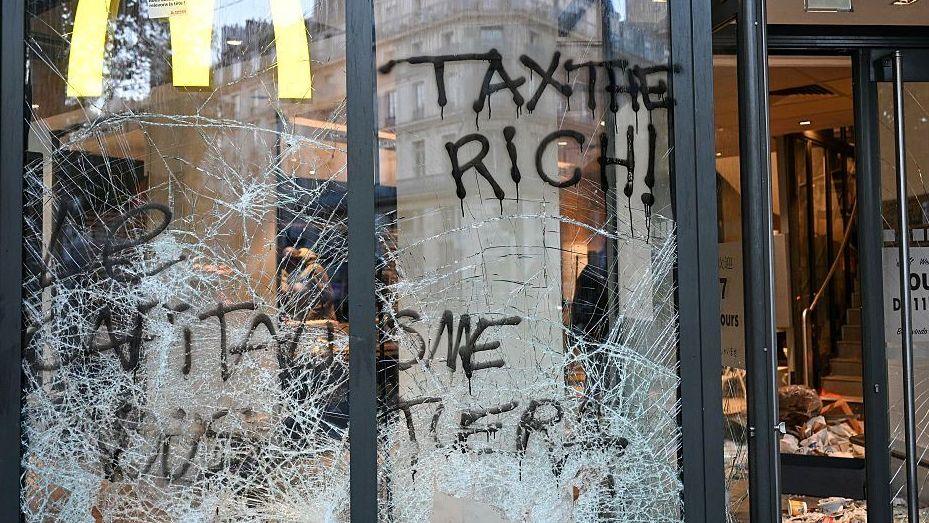
Meanwhile, looters emptied designer boutiques of RALPH LAUREN, GUCCI and VERSACE, painting shop fronts with slogans such as ‘tax the rich’ and ‘eat the rich’ while leaving thousands of shards of glass strewn across footpaths. The BBC captured a door‑to‑door raid on a clothing store near Place de la République where victims sat on a carpet of stolen goods and furniture that had been dumped by the same group.
Student groups mobilised days earlier over under‑funded schools, overcrowded classrooms and dilapidated school buildings – a protest that grew wildly when the city hall in Lyon was set aflame. In same breath, a tumour in the city of Saint‑Étienne left a young man with dismembered hand after a small explosive went off.
National police said the riots were organised by hooded individuals, often in black or balaclava, who targeted specific sites like the city hall in Marseille, the Apple store in Lille and the tourist office in Lyon.
The damage extends across the larger country – Grenoble, Avignon, Pau, Montpellier, Valence and even Rennes caught fire and the Ministry declared the attack not a random uprising but an organised attempt at damage.
With the streets still littered with ashes and glass, the French interior ministry warns that the next wave of protests may surface sooner; the government is already convening emergency councils and plans to brief the public about restrictions in busy districts.