In brief
Pakistan has taken on an unexpected role as a mediator in the Iran conflict, leveraging its strategic relationship with US President Donald Trump. While navigating its own regional challenges with Afghanistan and India, Pakistan's diplomatic maneuvers aim to promote peace, despite concerns about the potential repercussions of such a position. Experts highlight the risks and the high stakes involved as Pakistan balances its interests in a volatile geopolitical landscape.
In a surprising turn of events, Pakistan is positioning itself as a key mediator in the ongoing conflict between the United States and Iran. This dramatic shift has garnered attention against the backdrop of its existing regional challenges with Afghanistan and India.
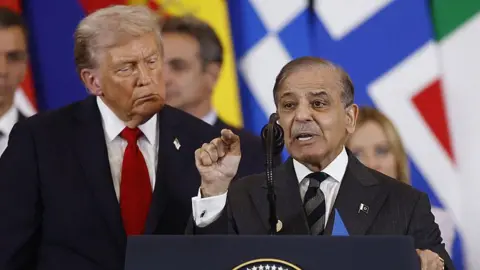
The Prime Minister of Pakistan, Shehbaz Sharif, is viewed favorably by US President Donald Trump, who has previously described the head of Pakistan's armed forces, Field Marshal Asim Munir, as his 'favorite' and acknowledged his keen understanding of Iran's complexities.
Despite escalating tensions, Pakistan's geographical proximity to Iran, coupled with its absence of US military bases, allows it to maintain a unique stance. As it seeks to facilitate dialogue between the two nations, the benefits of a peaceful resolution are deemed essential for Pakistan’s own geopolitical and economic stability.
However, this balancing act is laden with risks. Experts note that Pakistan's ongoing military operations in Afghanistan and its fraught relationship with India complicate its capability to act as a boundary spanner in the Iran-US discourse. Amidst these conflicting interests, questions arise regarding Pakistan's ability to maintain its credibility as a mediator.
The challenge for Pakistan lies not only in navigating these complex relationships but also in securing its own energy supply, reliant on oil imports via the Strait of Hormuz, which remains a critical waterway amidst ongoing threats of closure by Iran.
The importance of Pakistan's role cannot be overstated: it focuses on high-stakes diplomacy that could either enhance its global standing or further entrench it in the crossfire of international politics. As events unfold, vigilance and careful strategizing will be paramount for Pakistani officials navigating this precarious diplomatic landscape.