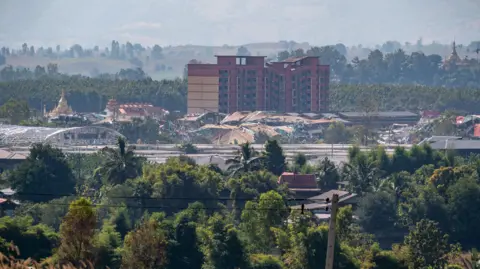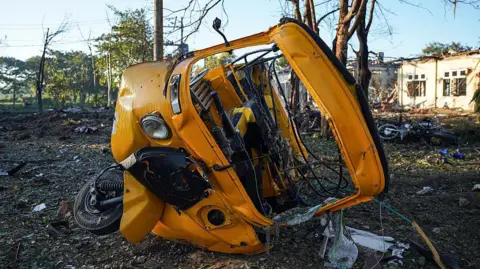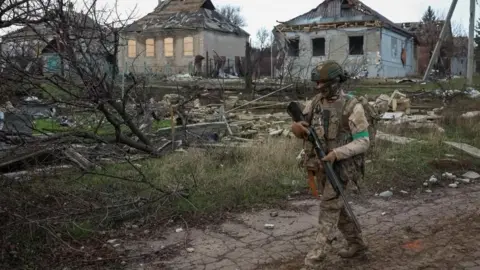
This revelation follows the military's recapture of the capital, including vital assets such as the presidential palace, approximately two months ago. However, the aftermath of the conflict remains tense, as fighting persists in other areas, notably Omdurman, also located within Khartoum state. On Monday, the army announced a "large-scale offensive" to regain control over the region, where clashes have recently erupted between the warring factions.
While Khartoum previously served as a hub for Sudan's governance, military leaders have relocated to Port Sudan since being ousted from the capital. This eastern city, which had been relatively secure, has now become embroiled in conflict as it faced drone strikes earlier this month, attributed by the army to the RSF. The resulting damage has led to infrastructure failures, exacerbating water shortages and power outages in the area.
The endured conflict has also strained international relations, especially with the United Arab Emirates (UAE), which Sudan has accused of backing the RSF. The UAE has strongly refuted these claims, calling them “unfounded allegations,” amidst ongoing diplomatic tensions between the two nations.
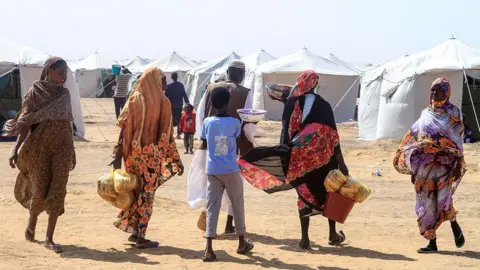
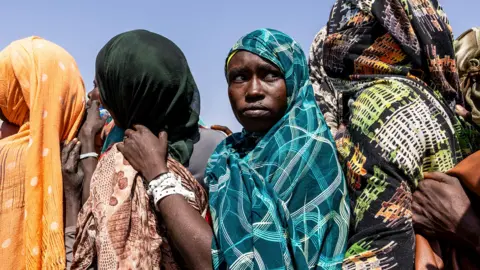
As the civil war rages on, the humanitarian toll is staggering, with thousands dead and millions displaced. Both the military and RSF have been implicated in war crimes, though they deny these accusations. The situation remains critical and continues to unfold with grave consequences for Sudan’s population.
While Khartoum previously served as a hub for Sudan's governance, military leaders have relocated to Port Sudan since being ousted from the capital. This eastern city, which had been relatively secure, has now become embroiled in conflict as it faced drone strikes earlier this month, attributed by the army to the RSF. The resulting damage has led to infrastructure failures, exacerbating water shortages and power outages in the area.
The endured conflict has also strained international relations, especially with the United Arab Emirates (UAE), which Sudan has accused of backing the RSF. The UAE has strongly refuted these claims, calling them “unfounded allegations,” amidst ongoing diplomatic tensions between the two nations.
As the civil war rages on, the humanitarian toll is staggering, with thousands dead and millions displaced. Both the military and RSF have been implicated in war crimes, though they deny these accusations. The situation remains critical and continues to unfold with grave consequences for Sudan’s population.