In brief
Authorities scramble to combat the fast-moving fires fueled by fierce winds while residents face evacuation orders.
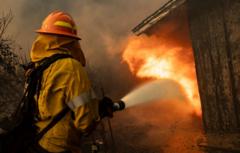
As wildfires rage through California, officials have mandated evacuations for thousands in affected areas, with the situation worsening over two consecutive days. Near Moorpark, 40 miles northwest of Los Angeles, the fires were first reported early on Wednesday and have rapidly expanded due to powerful winds. California Governor Gavin Newsom confirmed over 10,000 evacuation orders have been issued, placing around 3,500 homes and other structures in jeopardy. Federal assistance has been secured to bolster firefighting efforts.The National Weather Service forecasts a decrease in wind strength by Thursday night, yet they continue to warn of ongoing high fire danger conditions. Visuals from the area convey the alarming scene, with thick plumes of smoke engulfing neighborhoods. Ventura County fire chief Dustin Gardner described the fire as moving "dangerously fast," exacerbating the destruction of landscapes and properties alike. Two individuals were reported to have suffered smoke inhalation and received hospital treatment, though no firefighters experienced serious injuries. Local authorities across southern California have advised residents to remain vigilant against rapidly spreading fires, potential power outages, and fallen trees. Social media posts from the City of Ventura encouraged residents to conserve water to ensure an adequate supply for firefighting needs. Numerous schools in Ventura County, exceeding 20, are poised to close for Thursday, further reflecting the gravity of the situation. The fire ignited during a Santa Ana wind event, characterized by intense and dry winds, which reached gusts of 70 to 80 mph in certain parts of Los Angeles County on Wednesday. The Associated Press reported that the fire expanded dramatically from nearly 0.5 square miles (1.2 sq km) to over 16 square miles (62 sq km) in a mere five hours.California regularly grapples with wildfires, and the frequency and severity of burned areas in northern and central regions have surged fivefold from 1996 to 2021 compared to earlier periods, a trend attributed to human-induced climate change. While the intricate connection between wildfires and climate change is complex, experts assert that climate change enhances the likelihood of conditions such as heat and drought, which favor wildfire outbreaks.