
In brief
As the dream of electric flying taxis takes a nosedive in Europe, prominent companies like Volocopter and Lilium face severe financial difficulties, leading to stalled projects and restructuring efforts while Airbus remains on a stable trajectory.
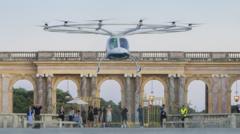
In the evolving landscape of electric flying taxis across Europe, financial struggles are dimming the prospects for innovative companies. Volocopter, a German firm, had high hopes of launching its VoloCity during the summer's Paris Olympics, but instead, it only conducted demonstration flights. Behind the disappointment lies a grim reality: the company is fighting for survival, having failed to secure a €100 million loan from the government in April. The company is now eyeing a lifeline through Chinese automotive giant Geely, which plans to acquire an 85% stake in Volocopter for $95 million. However, this deal may relocate future manufacturing operations to China, raising concerns among European stakeholders.Similarly, Lilium has caught significant attention with its novel eVTOL aircraft design, which utilizes 30 tilting electric jets for versatile flight capabilities. The company reported substantial interest, claiming orders for 780 aircraft worldwide. Despite a confident front at the Farnborough Airshow, Lilium is now facing a cash crisis. An attempt to secure a €100 million loan from KfW was stymied by a lack of government guarantees, resulting in the company entering insolvency proceedings in early November. While testing continues on their aircraft, the path to production has become increasingly fraught with challenges.Vertical Aerospace from the UK presents a contrasting case, showcasing its VX4 design, which boasts eight large propellers promising superior safety and noise reduction. The company has enjoyed progress, recently completing tethered test flights, but it has also faced significant setbacks, including a crash during testing and a critical loss of partnership with Rolls Royce. As of September, Vertical's funds are dwindling, requiring urgent investment to avoid insolvency. It remains dependent on a $75 million offer from financier Jason Mudrick, amidst internal resistance regarding control of the company.In contrast, Airbus appears resilient with its CityAirbus NextGen project. This four-seater eVTOL, boasting eight propellers and a promising range, is on track, supported by the financial and technical resources of the established aerospace giant. While the future of EVTOLs remains uncertain, with market sustainability a looming question, the industry must confront operational costs, particularly pilot salaries and constant battery replacement.Despite the turbulence in the European eVTOL sector, global players like Joby and Archer continue to promise potential, leaving stakeholders hopeful that electric flying taxis may yet take flight.

