Three days of public mourning in Tehran ended with a spectacle the leaders wanted the world to see.
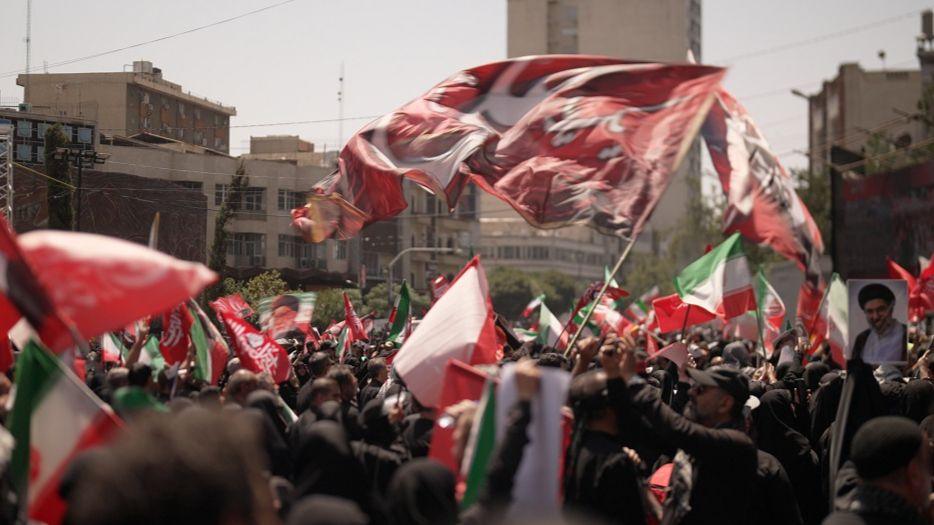
The funeral cortège travelled a 10km route, its coffins for the slain supreme leader and four relatives slowed by crowds of mourners, creating one of the largest gatherings in recent years.
The march was a carefully choreographed ceremony thick with the political messages of resistance and revenge. Many citizens opted out, disappointed by two wars in a year, rising inflation and the pain of January protests. Some blamed the commander‑in‑chief for a harsh crackdown that killed thousands.
A man outside a crowd of free food stations explained his absence: “Many people are unemployed, unhappy.”
Aerial shots captured loyalists chanting the arch‑signature slogans “death to America” and “death to Israel.”
The "spectacle Iran wants the world to see"
Symbols of grief were amplified by the green, red and white paint of the coffins, with red the loudest on the grieving crowds. The mourners’ flags echoed blood and martyrdom, calling for vengeance for the Supreme Leader’s assassination.
In rare live coverage, foreign journalists could see posters singling out the U.S. president, and an Iranian messaging app urged supporters to use slogans such as “Our revenge is inevitable.”
Supporters kept approaching visiting journalists to ask their origins and urged them to "tell the truth" about the state of affairs.
Even among the throng, younger Iranian women whispered that the true voices of the 2024 protests echoed in the streets. The road ahead remains uncertain as Iran concludes the burial of the founding leaders.
What follows in the nation’s new era
After the day’s speeches, the procession moved to sacred Shia locations – Qom, Najaf and Karbala – before the final burial on Thursday in Mashhad at the Imam Reza Shrine. The ceremony aimed to cast the former leader as a transcendent figure beyond a national role, extending his influence over the Muslim world.
The BBC’s chief international correspondent reports from Tehran on condition that his material not be used by the BBC Persian Service. This restriction applies to all international media in Iran.