In brief
The article discusses the stark ideological shift in American politics, tracing how the Republican Party's perception of Russia has changed dramatically over recent years, from viewing it as an adversary to embracing its leadership.
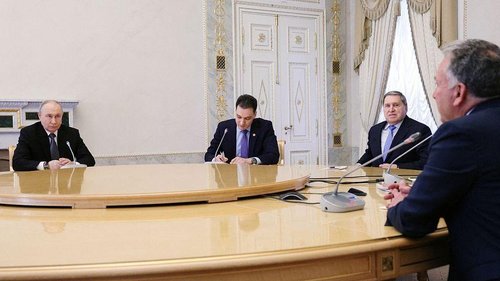
In a striking historical parallel, there was a time when Boris Yeltsin, the first democratically elected president of post-Soviet Russia, visited a Houston supermarket in 1989. Overwhelmed by the variety of goods available, he famously remarked on the plight of his fellow countrymen against a backdrop of joy that capitalism could offer. Fast forward to recent years, this scene has taken a turn as prominent American right-wing figures, like Tucker Carlson, visit Russia, showcasing a different narrative altogether. During his visit, Carlson expressed astonishment at the grocery options in Moscow, calling the experience radicalizing, hinting that America might need to embrace Putin’s vision of governance instead.The shift in sentiments has not gone unnoticed in broader political discourse, as former President Trump has vocally sided with Putin, undermining decades of established American foreign policy. Recently, he has shifted blame toward Ukraine for the ongoing conflict with Russia, a move that surprised many analysts and critics alike. His administration's stance, which includes inviting likeminded officials who echo these sentiments, further solidifies the pivot towards a relationship with authoritarian leaders.This realignment signifies a potential ideological overhaul of America's role on the global stage, as noted by experts like Sasha Havlicek from the Institute for Strategic Dialogue. Moving away from their post-World War II commitments as a bastion of democracy, America seems poised at a crossroads, aligning itself more closely with Putin's regime—a once familiar foe now being embraced. Hence, this transformation not only challenges historical precedents but also poses questions about the future of democratic values in the face of rising authoritarianism.