
In brief
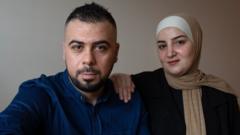
Syrian refugee Douna Haj Ahmed uncovers the painful history of her husband Abdullah Al Nofal's detention in the infamous Al-Khatib prison. Their emotional story reveals the resilience of survivors as they seek to share the horrors endured by many Syrians during the country's civil war.
In a poignant revelation in early December, Douna Haj Ahmed, a Syrian refugee living in London, discovered the disturbing truths surrounding her husband’s past while watching news coverage of prisoners escaping from the grips of the oppressive Syrian regime. The sight was unbearable, as Abdullah Al Nofal, her husband of eight years, pointed to the screen, revealing, "This is where I was arrested, this is the place."Having endured Syria's brutal civil war, Douna was aware of her husband’s suffering but had never heard the full extent of his experiences until this moment. “Abdullah doesn’t like to share things emotionally; he likes to look strong all the time,” she said. “It was a turning point. I saw him weak. I saw him crying. I could see this was closure.”Abdullah, now 36, was taken captive in July 2013 while working as a storekeeper with the International Committee of the Red Cross. Ensnared at a military checkpoint, he found himself handcuffed, blindfolded, and transported to Al-Khatib prison in Damascus, an establishment infamous for the torture and abuse administered to its inmates. As violence escalated in the country, Abdullah had distanced himself from protests that had initially ignited the uprising against the regime.Reflecting on his experience within the prison walls, Abdullah articulated the overwhelming darkness that engulfed him. “It was so dark for three days, I remember. You feel so lonely,” he recounted. Almost 60,000 people are believed to have been tortured or killed in various facilities operated by Assad's regime, and Abdullah faced the chilling specter of death every day.Witness accounts have revealed excessive brutality in Al-Khatib, underscored by a landmark trial in Germany that found a former colonel guilty of crimes against humanity. Ingrained in Abdullah’s memory are the haunting cries of fellow detainees enduring unimaginable torture, a stark reminder of the inhumanity that unfolded behind prison walls.After enduring 12 days of torture and solitude, Abdullah was interrogated and faced relentless beatings as officers sought to extract confessions of transporting weapons. To survive, he fabricated a narrative to shield himself from further brutality. "As long as you say, 'I didn't do it,' they will keep torturing you," he remembered, underscoring the pervasive fear that gripped him.Fortuitously, Abdullah was released after a month. He later immigrated, securing scholarships in Geneva and the U.S. Now residing in London, he feels the weight of his past beginning to lift, granting him the courage to share his story. “We finally finished with the regime, we can say we are really free right now,” Abdullah stated with newfound clarity.Douna, a human rights advocate, wept openly as she absorbed the chilling truths of her husband’s past. The depths of Abdullah’s experiences revealed a persistent brutality that often exceeds comprehension. “We are privileged that we are able to tell our stories. Lots of people, they died without being heard,” she reflected, marking their journey from silence to a powerful voice for countless others still suffering in silence.


