In brief
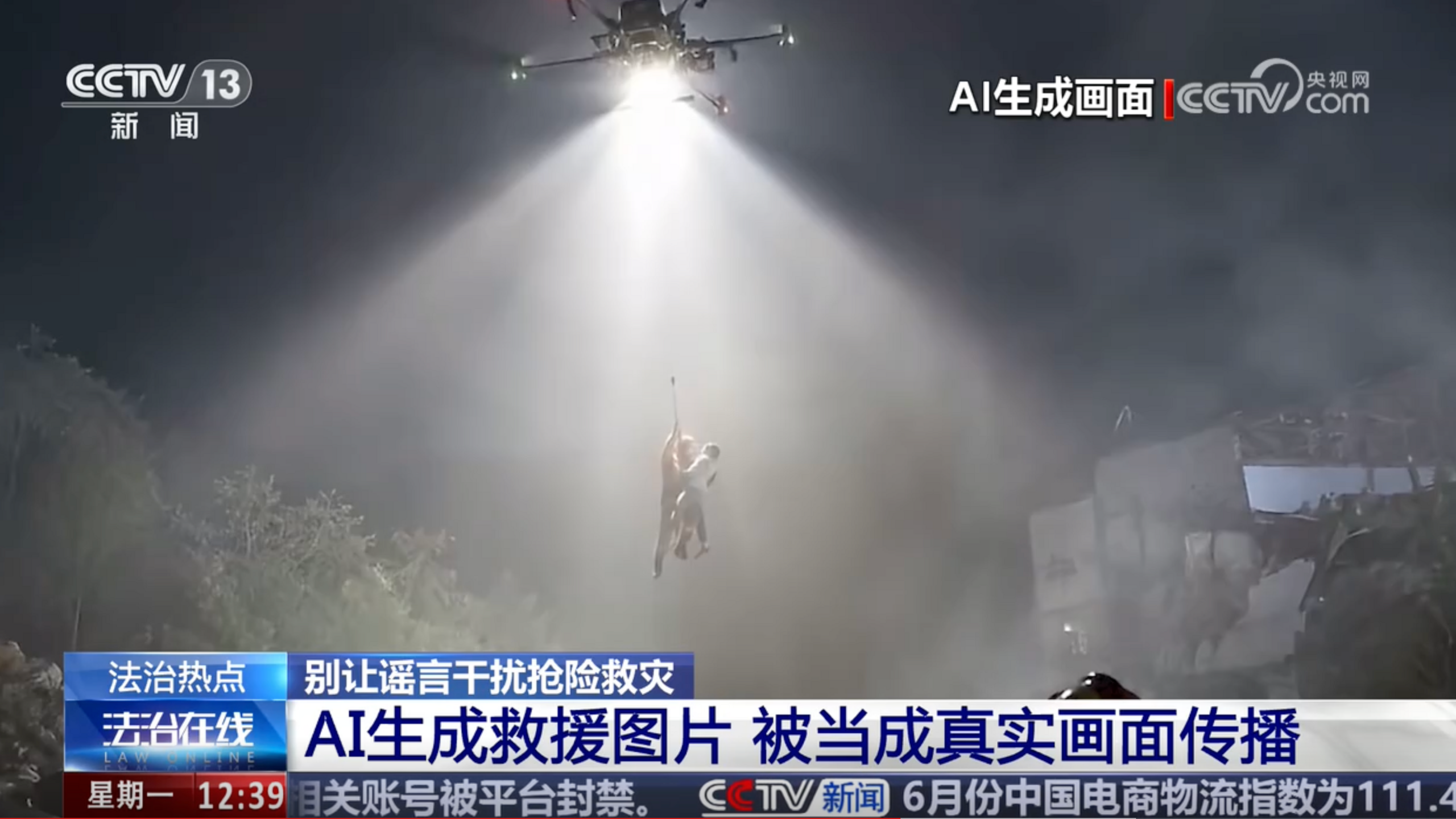
With Typhoon Noul’s aftermath still fresh, China is confronting a new threat: AI‑generated videos that spread false disaster news. Social media users saw fabricated footage of drowning, fake flood‑damage, and bizarre wildlife releases. Government officials warn that the low technical barrier of AI makes it easier for bad actors to create credible disinformation. A national task force is now monitoring short‑video platforms, and authorities threaten fines or up to seven years in prison for those who spread harmful content. Experts call for public education and platform accountability, while noting that legal frameworks lag behind rapidly evolving AI tools.
Reality offline is blurred by synthetic reality online. After Typhoon Noul struck China’s coast, residents were shocked to see a wave of AI‑generated videos claiming to depict dead bodies in floodwater, false land‑swap scenarios, and even dramatic wildlife releases. The easily accessible AI tools make it simple for anyone to craft convincing footage that can spread virally, complicating rational disaster responses.
Officials confront the dual crisis of flooding and misinformation. Yang Yu, a spokesperson for the state media, warned that while the government invests billions in AI to boost its tech ambitions, the same tech can create realistic yet entirely fabricated content. “People can now generate persuasive text, images, audio, and video with just a prompt,” said Professor Chen Bin, hinting at an impending surge in misuse.
Legal crackdowns and platform accountability. The Cyberspace Administration issued on 23 July a prohibition on fake content related to disasters, ordering local offices to confiscate fabricated data and urge platforms to enhance supervision. Police officials said they will enforce strict penalties: fines, seven‑year prison sentences, or harsher measures for online misinformation that leads to real‑world harm.
The call for education and reinforced legal frameworks. Experts credit a lack of public understanding and legal lag as the main drivers behind harmful AI content. While Chinese authorities emphasize that the law already covers such offences, scholars such as Professor Gao highlight that technology advances faster than regulations, meaning new legal questions constantly arise. Logger Peter Pang added that platforms enabling misinformation must shoulder responsibility, suggesting regulators could impose civil liability on sites that let false narratives spread unchecked.
A new era for trusted information infrastructure. The Chinese government may yet build official early‑warning systems and disaster interfaces that local news outlets can rely on, potentially mitigating the blurring effect of AI fake content. Yet the prevalence of misinformation—whether from disgruntled officials, bored content creators, or malevolent actors—remains a looming threat, increasingly likely in future crises including social elections, public health emergencies, and armed conflicts.