
In brief
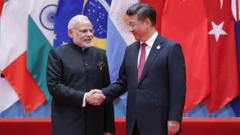
After a prolonged period of tension along their disputed border, India and China seem to be cautiously approaching a reset in their bilateral relations. Recent visits by senior Indian officials to China have sparked optimism for improved ties, with discussions addressing several longstanding issues. However, entrenched suspicions and geopolitical considerations continue to complicate the path forward.
The recent visit by Indian National Security Adviser Ajit Doval and Defence Minister Rajnath Singh to China marks a notable effort to foster dialogue. Singh’s visit, being the first by a senior Indian official in five years, reflects an interest in addressing tensions that erupted dramatically in June 2020 during a violent clash in the Galwan valley, where both Indian and Chinese soldiers lost their lives.Amidst the backdrop of growing global uncertainty, both nations are motivated to find common ground. Agreements reached last year concerning friction points in Ladakh, coupled with the recent restoration of direct flights, indicate a desire to normalize interactions. However, experts caution that deeper economic and trade challenges remain. India, heavily reliant on Chinese imports, particularly rare earth minerals, underscores the necessity for stable border conditions to foster economic growth.Strategically, Beijing's interest also lies in maintaining peaceful relations in the Himalayas, particularly against the backdrop of its focus on Taiwan. Concerns linger regarding Western influence and support for India, especially under the current U.S. administration. Recent tensions with Pakistan have prompted India to reevaluate its relationships, as increased military cooperation between China and Pakistan raises alarm.Despite the pragmatic approach adopted in Delhi, strategic analysts emphasize the importance of not appearing overly accommodating to Chinese demands. The shifting allegiances in global geopolitics, particularly with Russia’s alignment with China amid the Ukraine conflict, add another layer of complexity for India.Additionally, China’s recent trade restrictions, particularly concerning vital exports like rare earth elements, have placed pressure on India’s manufacturing sectors. In response, discussions are underway between the two nations to address these trade concerns, though lasting relational agreements appear distant due to ongoing territorial disputes.Overall, while both nations seek enhanced cooperation, the potential for future conflicts remains high unless a mutual understanding can be achieved regarding sovereignty claims. As India and China navigate this cautious thaw, their ability to forge a practical relationship will be vital in mitigating future tensions.


