In brief
The heckling incident highlights ongoing tensions surrounding Australia's Colonial past and the demands for acknowledgment and reconciliation from Indigenous communities.
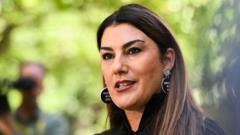
Lidia Thorpe, the first Aboriginal senator from Victoria, has once again found herself at the center of controversy following a recent incident where she heckled King Charles during his official visit to Australia. Known for her outspoken views on the British monarchy and its colonial impact, Thorpe's actions did not come as a surprise to those familiar with her history of activism.Since her election to the Senate in 2020, Thorpe has been an advocate for Indigenous rights, making her position clear during her swearing-in ceremony in 2022 when she referred to the late Queen Elizabeth II as a "coloniser." Her remarks reflect a deep-seated belief that colonial histories have left profound and lasting scars on First Nations communities in Australia.Following the heckling incident, which saw Thorpe escorted from the venue, she reiterated her views to the BBC stating, "To be sovereign you have to be of this land. He’s not of this land." Thorpe argued that the monarchy, represented by King Charles, has inherited wealth gained through the systemic displacement and oppression of Indigenous peoples. She emphasized the need for a peace treaty between the Crown and Indigenous Australians, stating, "He needs to entertain a conversation for a peace treaty in this country."Thorpe's criticism stems from a broader perspective of ongoing disparities faced by Indigenous Australians, evidenced by data showing drastic differences in education, health, and life expectancy when compared to their non-Indigenous counterparts. Notably, a recent statement from Prime Minister Anthony Albanese highlighted the troubling statistics, illustrating that young Indigenous men are often more likely to face incarceration than pursue higher education.While Thorpe's views resonate with many Indigenous rights advocates, not all Indigenous leaders share her approach. Allira Davis, co-chair of the Uluru Youth Dialogue, expressed a more neutral stance regarding the royal visit, underscoring the need for Australia to recognize its multicultural identity while also emphasizing the necessity of recognizing Indigenous peoples.Despite facing criticism, Lidia Thorpe remains steadfast in her mission to raise awareness about the injustices faced by Indigenous communities and the need for a treaty, asserting that Australia must confront its colonial past to forge a more equitable future. As discussions around the monarchy's role in Australia's history continue to evolve, Thorpe's actions serve to spotlight the complex relationship between Indigenous Australians and the Crown.