In brief
The Indian film industry in 2025 saw a troubling return to hypermasculine narratives with action thrillers and male-centric stories leading box office hits. Unlike the previous year, which showcased women's stories, this year significantly favored aggressive male portrayals, leading critics to question the balance of representation in Bollywood's evolving narrative landscape.
For the Indian film industry, 2025 felt like a return to familiar ground.
The year before that, women-led stories had briefly reshaped India's global cinematic image, bringing accolades and new attention. But last year, Bollywood's violent, male-driven action thrillers dominated the domestic box-office and cultural conversations.
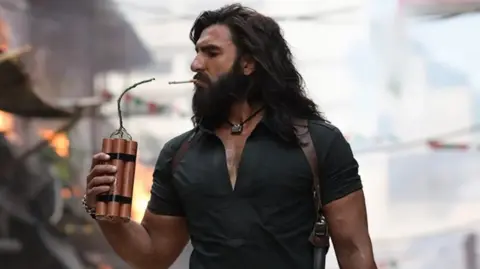
In the last weeks of 2025, Indian social media was swamped with discussions about a single juggernaut: Dhurandhar, an espionage thriller set in the backdrop of India-Pakistan tensions. Packed with graphic violence and gangland politics, the film became the defining hit of the year, cementing its place in a crop of aggressive, hypermasculine films that drove popular discourse.
The trend was a stark contrast to 2024, when a number of films made by women - Payal Kapadia's All We Imagine As Light, Shuchi Talati's Girls Will Be Girls and Kiran Rao's Laapataa Ladies - got global attention and praise.
What 2024 established was that Indian women filmmakers are not marginal voices, but leading global ones, says film critic Mayank Shekhar, calling it a moment of truth rather than a trend.
The hope was that richer, more textured stories about women would grow both in number and popularity. Instead, in 2025 the top 10 box-office hits - five of them from Bollywood, a small relief for a Hindi film industry still struggling to regain its footing after the pandemic - were dominated by larger-than-life, hypermasculine heroes, from the historical epic Chhaava to the action spectacle War 2. The only film on the list led by a woman was an outlier: the Malayalam-language superhero film Lokah.
It wasn't just action thrillers that put men at the centre. Blockbuster romance Saiyaara followed a troubled male rockstar who ultimately rescues his partner who is struggling with Alzheimer's disease. Even mythical spectacles such as Kantara: Chapter 1 (Kannada) and Mahavatar Narsimha (dubbed into several languages) doubled down on traditional male heroism.
The year's most talked-about films were dominated by images of men performing pain, power and vengeance at full volume.
Out of the top 10, one of the year's most debated hits was Tere Ishk Mein, which features an angry, volatile male protagonist and a high-achieving woman whose ambitions are eclipsed by his obsessive love. Despite criticism for romanticising toxic masculinity, the film became actor Dhanush's highest-grossing Hindi release, earning more than 1,550m rupees ($17.26m, £12.77m) worldwide.
Trade experts argue that the shift reflects audience demand rather than creative regression in the industry.
While a new generation of independent filmmakers in India is making riveting, viable cinema rather than mass entertainers, the dominance of hypermasculine films reflects deep-rooted societal norms. As long as these films continue to make money, the industry is unlikely to pivot towards more inclusive storytelling.