In brief
At the recent BRICS summit held in Russia, the alliance demonstrated its evolving prowess by welcoming four new members: Egypt, Ethiopia, Iran, and the United Arab Emirates. This expansion marks a significant shift for an organization often criticized in the West for its lack of influence, now emerging as a leading voice against Western-centric global governance. For India, the expanding BRICS presents an opportunity to strengthen ties and enhance its strategic position on the world stage.
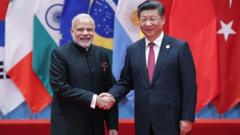
Historically, India has maintained strong connections with many of the new members. Egypt now stands as a key partner in trade and security in the Middle East, while the UAE has emerged as one of India’s most crucial allies. Moreover, India's relationship with Ethiopia highlights decades of engagement in Africa, underscoring the depth of its partnerships within the newly expanded BRICS framework. Crucially, India's involvement in BRICS enables it to navigate a complex geopolitical landscape, particularly concerning its ties with Russia and China. Engagement with Russia can help bolster its defense and economic agendas, while collaboration with China provides an avenue to ease pervasive tensions, especially given the recent border patrolling agreement. Such diplomatic interactions offer Prime Minister Narendra Modi an opportunity for informal dialogue with Chinese President Xi Jinping to address key issues.Additionally, BRICS aligns with India's foreign policy of maintaining strategic autonomy, allowing it to forge diverse alliances without committing to one bloc. This is particularly salient as India balances its relationships with Western powers and its BRICS partners, embodying a multifaceted diplomatic approach.The priorities set forth by BRICS align closely with India's objectives, enhancing its standing among the Global South and advocating for a reformed multilateral system. The recent summit's communique underscored common goals like UN reform and fair trade practices, echoing India's long-term aspirations to gain a permanent seat on the UN Security Council.However, concerns linger regarding BRICS potentially adopting an anti-Western posture. Despite the inclusion of Iran and other nations with contentious ties to the West, the coalition is not inherently anti-West. Many new members have substantial relationships with Western nations, suggesting a more complex interplay rather than a simplified adversarial dynamic.The efficacy of BRICS is often questioned, particularly regarding its ability to implement initiatives that challenge Western dominance. Economic, geopolitical, and historical discrepancies among member states complicate efforts to establish a cohesive strategy, indicating that BRICS might face obstacles in asserting collective influence on global affairs.The recent summit, while acknowledging challenges, also yielded a renewed commitment to manageable initiatives in areas like climate change and public health, marking a pragmatic approach to collaboration. These forthcoming projects exemplify opportunities for BRICS members to work in tandem rather than oppose the West, ideally suiting India’s balanced diplomatic agenda.In conclusion, as BRICS continues to grow and evolve, it presents India with a unique platform to enhance its role on the global stage while fostering relationships that do not compromise its ties to Western allies. This balance underlines India's crucial position in a shifting geopolitical landscape, ultimately ensuring that its involvement in BRICS remains a strategic asset rather than a liability in the face of Western scrutiny.