In brief
In a shocking move, President Yoon Suk Yeol's declaration of martial law has unleashed fears of a return to South Korea's authoritarian past, leading to public outcry and immediate political backlash.
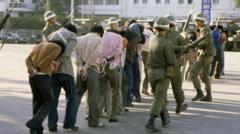
Koh Jae-hak, now 87, can still recall the horrific scene from April 1960, when he watched soldiers fire at protesting students calling for the resignation of president Syngman Rhee. That moment marked the beginning of martial law and added to South Korea's history of oppressive governance, which saw 16 instances of martial law during its first four decades under military rule. The latest declaration from President Yoon has stirred deep-rooted fears among many citizens, as it is the first martial law declaration in 45 years during a time of democratic governance.Yoon's announcement came as turmoil gripped the nation. The president claimed the martial law was necessary to eliminate pro-North Korean sentiment and anti-state elements, which left many citizens in disbelief and confusion regarding the authenticity of the alleged threats. With no concrete evidence provided and the language echoing past justifications for authoritarian measures, the public quickly perceived it as an attack on his political opponents rather than a genuine security concern.The historical context weighs heavily in current discussions, with memories of violent crackdowns—most notably the 1980 Gwangju uprising—haunting generations who remember martial law’s repression of dissent. During the Gwangju uprising, a devastating military response to pro-democracy protests led to an official death toll of 193, although estimates suggest many more may have lost their lives.Activists and citizens voiced their alarm at Yoon's actions, with many recognizing the enduring trauma associated with decades of martial law. Kelly Kim, an environmental activist, emphasized the catastrophic impacts it had on civil liberties, including censorship and the suppression of dissent. As South Korea has flourished since transitioning to democracy in 1988, artistic portrayals of the struggles against dictatorship have emerged, keeping the memory of past oppression alive.Younger generations express disbelief at the prospect of martial law returning, despite being taught through family narratives about the oppressive nature of such governance. Fifteen-year-old Kwon Hoo shared feelings of anxiety about the potential collapse of daily life, while his father expressed frustration over the possibility of returning to curfews.Interestingly, perceptions of the authoritarian past vary within the country. While a majority of South Koreans cherish their newfound democracy, some older citizens reflect on martial law favorably, arguing it was essential for national stability during turbulent times marked by ideological conflict.Yet elders like Koh and his friend Kang Hyo-san, now 83, stand against the current administration's militaristic tendencies, asserting that the present political climate does not warrant a resurgence of martial law. The duo expressed a collective sentiment that democracy should remain inviolable, emphasizing the sacrifices of past struggles against oppression.As protests erupt across the nation demanding Yoon's resignation, the echoes of history remind South Koreans just how vital it is to protect their democratic rights. The message is clear: having fought hard for their freedoms, they will not allow history to repeat itself without a fight.