
In brief
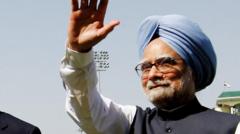
Reflecting on his pioneering contributions, the late prime minister's policies not only reshaped the economic landscape but also fortified democratic rights.
In the wake of his recent passing, India reflects on the transformative legacy of former Prime Minister Manmohan Singh, who served from 2004 to 2014. Singh, hailed as the architect of India’s economic liberalization, set the nation on a course that significantly altered its growth trajectory. As the first prime minister to return to power since Jawaharlal Nehru, and notably the first Sikh in the role, Singh’s tenure is marked by various pivotal decisions.Taking office amidst a severe financial crisis in 1991, Singh was appointed as finance minister by Prime Minister PV Narsimha Rao. Under his stewardship, the Indian economy faced imminent collapse with dwindling foreign reserves. To avert disaster, Singh spearheaded an agenda of deregulation that included devaluing the currency, slashing import tariffs, and privatizing state-owned enterprises. He famously asserted in parliament that “no power on Earth can stop an idea whose time has come.” His economic reforms not only lifted millions out of poverty but also positioned India as one of the world’s fastest-growing economies.In the 2004 elections, Singh was unexpectedly chosen to lead the Congress party, despite Sonia Gandhi's initial candidacy. Many critics dubbed him a "remote-controlled" prime minister, guided by the Gandhi family, yet he ignored such jabs and focused firmly on governance. Throughout his tenure, particularly during his first term, the economy grew robustly, averaging around 8% GDP growth. Singh's prudent decisions during the 2008 global financial crisis were instrumental in shielding India from its repercussions.Singh's contributions extended beyond economics. He championed landmark legislation that fortified citizen rights in a democracy, introducing laws that granted public access to information, established a dual rural employment scheme, and ensured free education for children aged 6 to 14. His government also initiated the Aadhar project to enhance financial inclusivity for the poor—a policy continued by subsequent administrations.In a landmark moment for reconciliation, Singh issued a formal apology in 2005 for the anti-Sikh riots of 1984, expressing remorse not just to the Sikh community but to the entire nation. This gesture marked a significant departure from political norms, highlighting his commitment to national unity.Moreover, his tenure witnessed significant foreign policy shifts, most notably the 2008 nuclear deal with the United States, which lifted India's nuclear isolation. Although controversial and met with criticism over sovereignty concerns, Singh adeptly maneuvered through political challenges to secure the deal, signaling a new chapter in India-US relations.As Indians commemorate Singh’s life, his indelible impact on the country prevails, positioning him as a transformative figure whose policies will resonate for generations to come.
