In brief
Authorities in South Africa are struggling to balance enforcement and humanitarian concerns as thousands of illegal miners remain trapped underground amid a government crackdown on illegal mining.
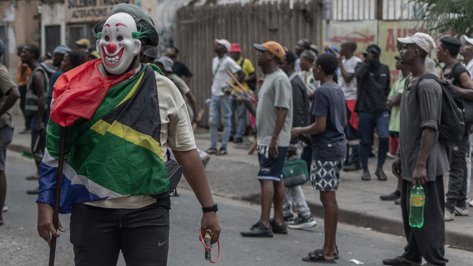
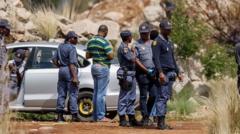
In an unprecedented move, the South African government has cut off supplies to an estimated 4,000 illegal gold miners nestled deep in the abandoned shafts of Stilfontein, North West province. With the operation aimed at "smoking out" these miners, authorities have already arrested around 1,000 individuals amid fears of deportation among many undocumented workers from Lesotho and Mozambique. Illegal mining, a risky but lucrative venture often referred to as "zama zama" (meaning "take a chance" in Zulu), poses serious economic challenges for the nation as it results in significant financial losses annually.The miners have been underground for nearly a month, surviving in an alarming state. Despite urging from local residents for help, authorities remain firm in their stance, equating aid to these miners with criminal assistance. South Africa’s Minister in the Presidency, Khumbudzo Ntshavheni, emphasized that "criminals are not to be helped," asserting that the operation is crucial for national security. The situation has garnered significant attention, prompting the South African Human Rights Commission to launch an investigation into the government's tactics, questioning the morality of depriving individuals of essential resources in pursuit of law enforcement. Conditions within the mine are dire, with community leader Thembile Botman reporting that decomposing bodies have been discovered, leaving volunteers traumatized. Temporary aid through ropes has been allowed, but residents express desperation as the miners refuse to emerge due to threats of violence and criminal charges.Concerns have been raised by advocacy groups, including Benchmarks Foundation's Busi Thabane, who described the ongoing crisis as a humanitarian issue, noting that many miners endure perilous conditions underground solely to provide for their families. Mixed reactions from the public reveal a split in sentiments regarding the government's approach; some endorse the decisive action while others criticize it as inhumane.As authorities maintain a heavy presence at the site, they face challenges in collecting those who are unwilling to cooperate. This high-intensity operation is part of a broader effort to combat illegal mining—which has significant environmental repercussions and poses safety hazards—as South Africa grapples with an industry that remains perilously interwoven with poverty and unemployment. The debate over the legality and morality of the crackdown is ongoing, placing South African authorities at a crossroads between enforcing law and addressing evident humanitarian needs within their borders.