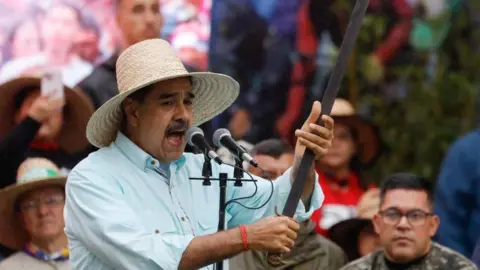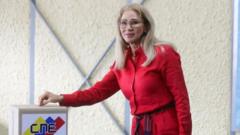
In a culmination of political discord, Venezuela's ruling party, the United Socialist Party of Venezuela (PSUV), is celebrating what it calls a decisive election victory in recent regional and parliamentary polls. The elections, boycotted by a majority of opposition parties, saw the electoral council (CNE) — largely seen as a government loyalist entity — announcing that PSUV candidates secured 23 out of 24 state governorships and won 82.68% of the votes for the National Assembly.
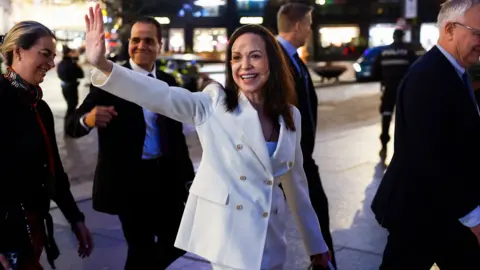
Opposition leader María Corina Machado has denounced the elections, labeling them a "farce" and claiming that less than 15% of the electorate participated. She stated, "More than 85% of Venezuelans did not obey this regime and said 'no,'" referring to the significant abstention rate. Independent reports indicated a lack of queues at polling stations and low turnout compared to the previous presidential election in July.
The reliability of the CNE has long been a point of contention, as the organization, led by former legal advisor to President Nicolás Maduro, Elvis Amoroso, was criticized for overtly favoring the ruling party. In the wake of accusations of electoral manipulation, observers have noted a continued pattern of power consolidation by Maduro's administration.
While most opposition figures abstained, some, such as former presidential candidate Henrique Capriles, chose to run, advocating for participation as a form of resistance. This decision faced backlash from more hardline figures like Machado, who accused them of betrayal.
The PSUV's electoral success marks a consolidation of power, regaining control of previously lost governorships. However, the results were overshadowed by widespread reports of harassment and the repression of dissenting voices in the lead-up to the vote, with many opposition members detained on alleged terror charges.
In an unusual turn, voters were also asked to elect representatives for the Essequibo region, which Venezuela claims but is controlled by neighboring Guyana. The move has been denounced by Guyanese officials as an illegitimate attempt to assert influence over the territory, which has garnered attention from the International Court of Justice.
In sum, the Venezuelan electoral landscape remains contentious, with the ruling party celebrating victories amidst claims of fraud and repression. The ramifications of these elections are likely to shape the country’s political future dynamically, as opposition leaders continue to challenge the legitimacy of Maduro’s government.
Opposition leader María Corina Machado has denounced the elections, labeling them a "farce" and claiming that less than 15% of the electorate participated. She stated, "More than 85% of Venezuelans did not obey this regime and said 'no,'" referring to the significant abstention rate. Independent reports indicated a lack of queues at polling stations and low turnout compared to the previous presidential election in July.
The reliability of the CNE has long been a point of contention, as the organization, led by former legal advisor to President Nicolás Maduro, Elvis Amoroso, was criticized for overtly favoring the ruling party. In the wake of accusations of electoral manipulation, observers have noted a continued pattern of power consolidation by Maduro's administration.
While most opposition figures abstained, some, such as former presidential candidate Henrique Capriles, chose to run, advocating for participation as a form of resistance. This decision faced backlash from more hardline figures like Machado, who accused them of betrayal.
The PSUV's electoral success marks a consolidation of power, regaining control of previously lost governorships. However, the results were overshadowed by widespread reports of harassment and the repression of dissenting voices in the lead-up to the vote, with many opposition members detained on alleged terror charges.
In an unusual turn, voters were also asked to elect representatives for the Essequibo region, which Venezuela claims but is controlled by neighboring Guyana. The move has been denounced by Guyanese officials as an illegitimate attempt to assert influence over the territory, which has garnered attention from the International Court of Justice.
In sum, the Venezuelan electoral landscape remains contentious, with the ruling party celebrating victories amidst claims of fraud and repression. The ramifications of these elections are likely to shape the country’s political future dynamically, as opposition leaders continue to challenge the legitimacy of Maduro’s government.